During the planting season, the Thai community in Vietnamese villages carefully selects and cultivates glutinous rice specifically for the Tet festival. This locally grown rice variety is prized for its sticky texture and fragrant aroma, making it ideal for crafting the traditional bánh chưng.
Historically, villagers would choose the most fertile land to plant aromatic glutinous rice varieties such as ‘nếp tan,’ ‘nếp dúa,’ or ‘nếp lai.’ After harvesting, they would store the rice for Tet, using it to prepare bánh chưng for ancestral worship. Lo Panh Cuong, a resident of Sam Mun commune in Dien Bien province, reminisces about this tradition.
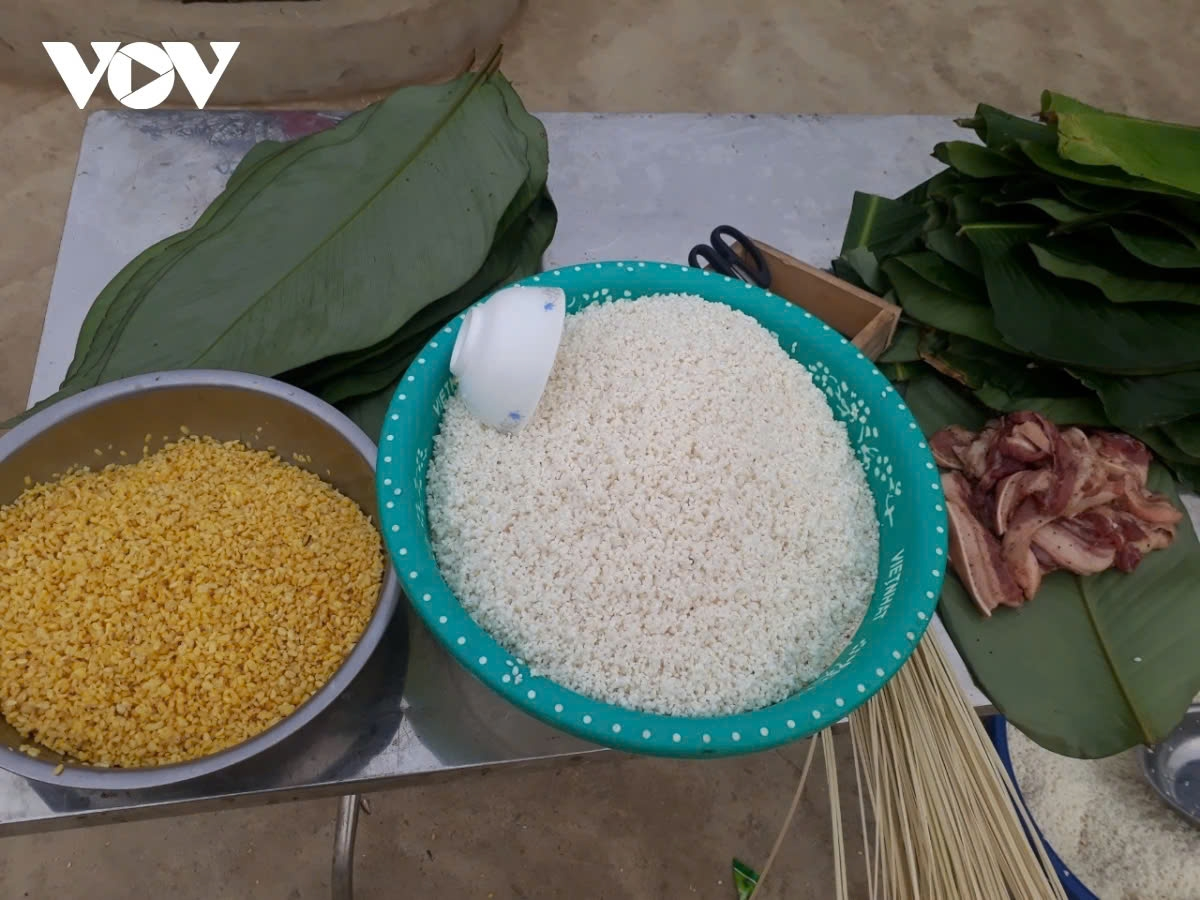
Approximately 20 days before Tet, villagers venture into the forest to gather dong leaves and cut branches from the giang tree. These branches are remarkably flexible, perfect for tying the cakes. From the 28th to the 30th day of the 12th lunar month, families begin preparing the glutinous rice, pork, green beans, or black-eyed peas (some prefer peanuts) for the bánh chưng.
After washing the rice and soaking the beans overnight, a pinch of salt is added to season the rice. The dong leaves are meticulously cleaned, dried, and trimmed to ensure softness when wrapping the cakes.
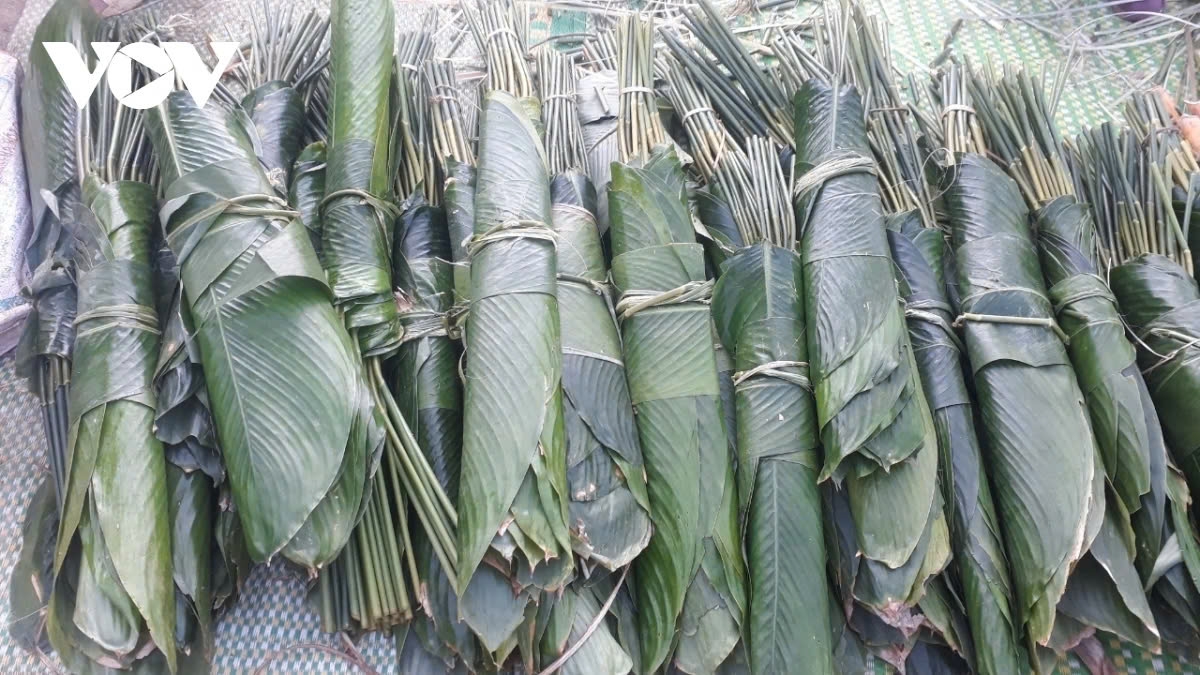
The Thai community crafts two distinct types of bánh chưng: bánh chưng ống (tube-shaped) and bánh chưng gù (humped).
For bánh chưng ống, large, long dong leaves are selected. Rice is spread on the leaves, followed by a layer of meat and beans, and then covered with another layer of rice. The leaves are rolled up, and the ends are securely tied with giang strings to prevent water from seeping in during boiling.
Lo Thi Phien from Phieng Xay village in Hat Lot commune, Son La province, explains, “This annual tradition is cherished, and my family takes great care in wrapping bánh chưng for ancestral worship, praying for a prosperous new year. Boiling the cakes requires careful attention to maintain a steady flame, ensuring even cooking. The water level must be just right to prevent burning.”
Bánh chưng gù is simpler to make. Large dong leaves are chosen, either cut or left whole. Rice and filling are arranged on the leaves, with a larger portion of rice in the center to create the humped shape. The leaves are folded at an angle, tightly securing the cake. Two cakes are then placed together, bound with giang string, with the humped sides facing outward.
Once wrapped, the cakes are placed in a large pot lined with dong leaves and boiled for about 12 hours. After cooking, they are rinsed, drained, and placed on the altar for ancestral worship before being enjoyed by the family.
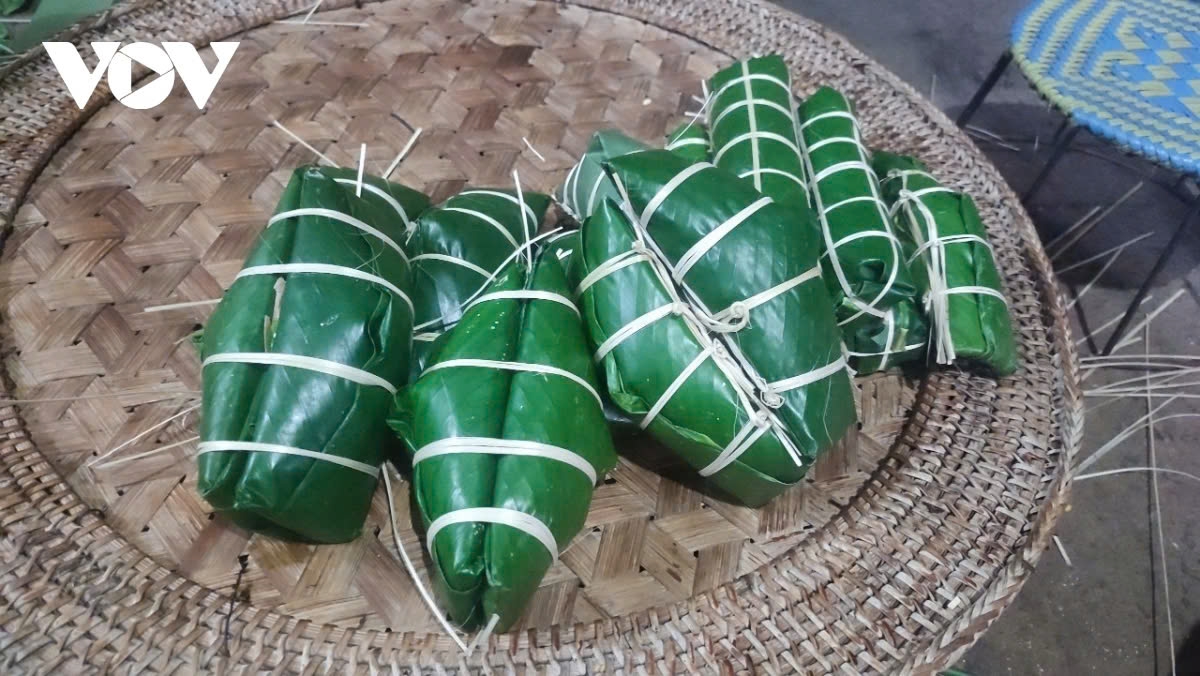
The finished bánh chưng exudes the fragrant aroma of glutinous rice, complemented by the savory flavors of peanuts, beans, and other fillings. Both bánh chưng ống and bánh chưng gù are conveniently portioned, making them easy to share among family and friends.
Lo Panh Cuong shares, “In the Muong Thanh – Dien Bien area, bánh chưng gù is a popular choice. The two bound cakes symbolize happiness and prosperity, representing life’s blessings. Every family prepares bánh chưng for Tet, honoring their ancestors.”
Traditionally, the Thai made bánh chưng exclusively for ancestral worship and Tet celebrations. Today, both bánh chưng ống and bánh chưng gù are sold in local markets across mountain villages, becoming cherished cultural symbols of the highlands.
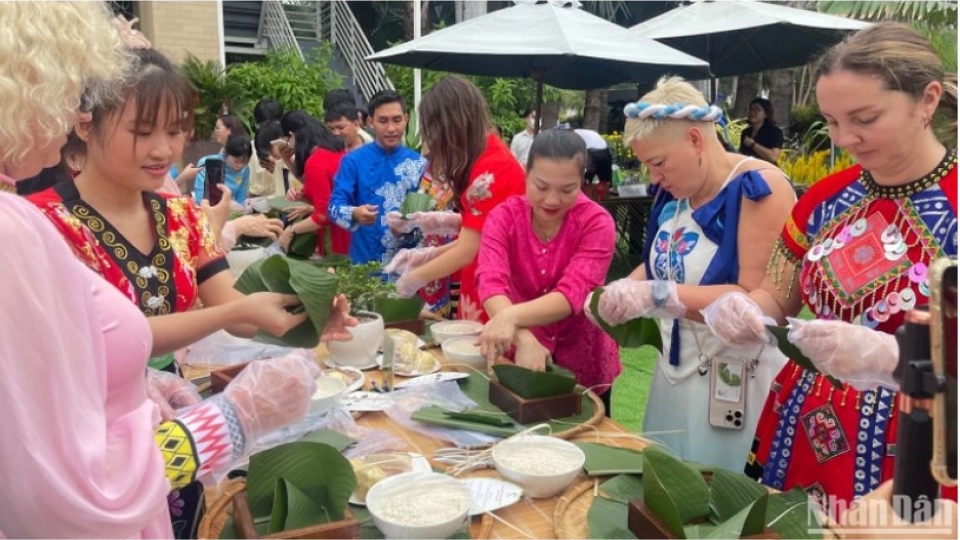
Foreign Visitors Enthusiastically Join Tet Cake Wrapping Contest
VOV.VN – On January 18, a large number of foreign tourists eagerly participated in a bánh chưng wrapping contest in Phan Thiet city, Binh Thuan province. This event celebrated the traditional Vietnamese dish during the Lunar New Year holiday (Tet).
The Great Pest-Killing Festival: Hanoi’s Lively Market
The early hours of June 10th witnessed a bustling scene as Hanoians flocked to local markets in a rush to purchase traditional items for the upcoming Đoan Ngọ Festival. Affectionately known as “Tết giết sâu bọ,” this unique celebration takes place annually on the fifth day of the fifth lunar month. It was a lively morning filled with excitement and anticipation as residents prepared to partake in this beloved cultural tradition.
Cultural Beauty of Vietnamese Tet Blossoms in Australia during Homeland Spring

For the first time ever, “Homeland Spring” is making its grand debut in Northern Australia, showcasing the incredible talents of numerous Vietnamese artists and artisans.