

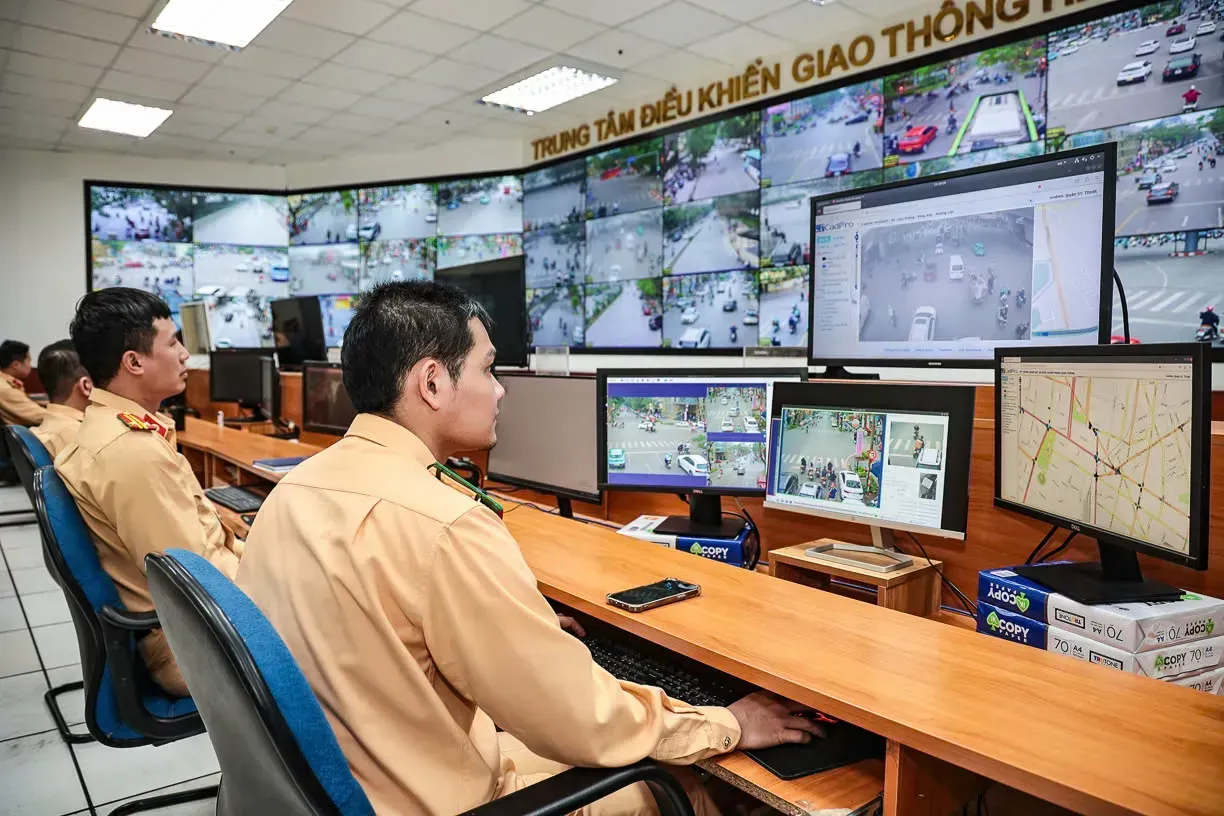
THE HANOI TIMES — Hanoi’s cutting-edge AI-powered traffic camera system has demonstrated significant improvements in road safety, congestion reduction, and driver compliance just one month after its launch, according to the Hanoi Public Security Department.
From December 13, 2025, to January 12, 2026, the system captured thousands of images and video clips, providing irrefutable legal evidence for automated traffic enforcement. This marks a pivotal milestone in Hanoi’s digital traffic management initiative.
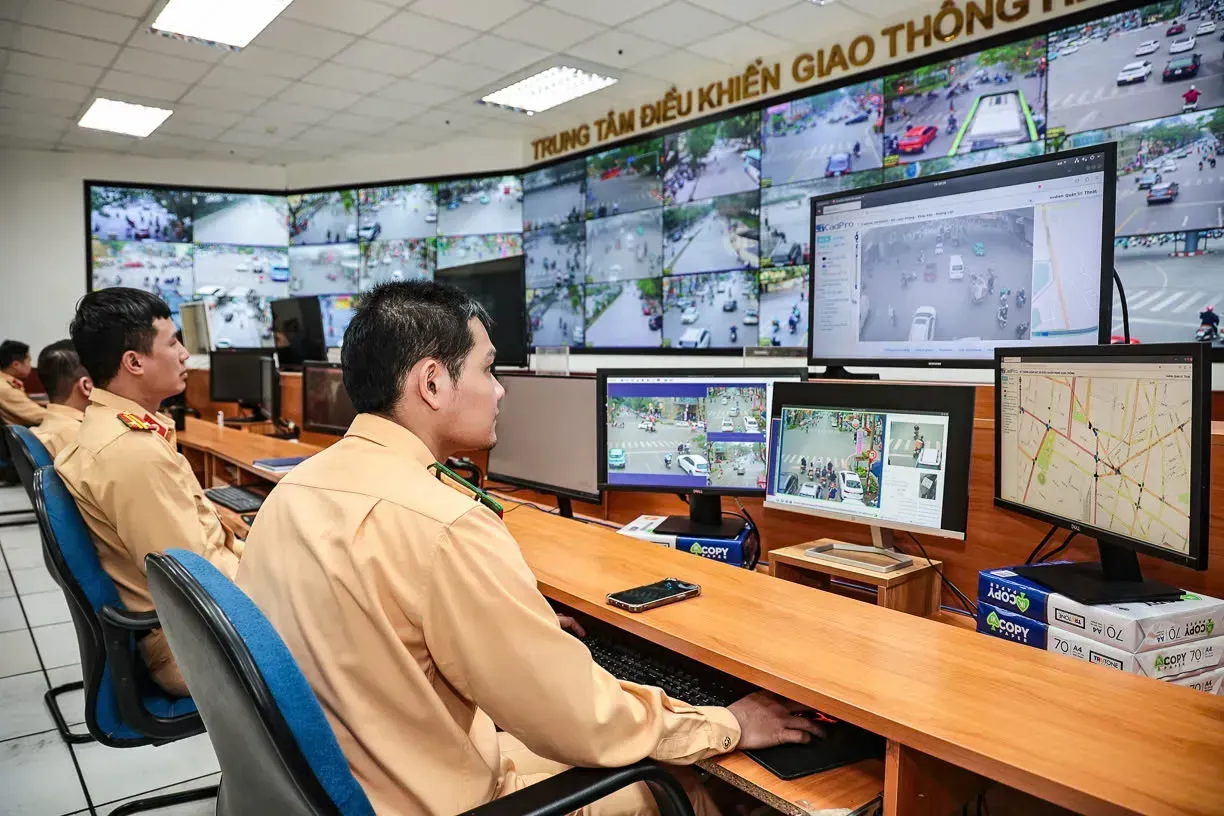
The AI camera system’s launch signifies a major leap in the Hanoi Traffic Police’s digital transformation journey. Photo: Pham Cong/The Hanoi Times
These achievements follow the deployment of 1,837 AI-powered cameras across 25 major roads and 195 critical intersections on December 13, 2025, as part of the Hanoi Traffic Police’s strategic digital roadmap.
Data reveals the system flagged 6,351 violations eligible for automated enforcement, with red-light infractions accounting for 66.36% and helmet violations at 32.32%. Motorcycles were the primary offenders in the majority of cases.
Authorities emphasize that violations are processed with objectivity and transparency via digital platforms, enhancing deterrence and prevention efforts.
The implementation of smart signal control has slashed travel times by 20%-36% and boosted vehicle throughput at intersections by 8%-19%, effectively alleviating congestion at key traffic hotspots. Comparisons with pre-deployment periods show increased traffic volumes at all intersections utilizing AI-based signal control.
At the heart of this system is the Smart Traffic Light Controller, which orchestrates synchronized green waves along major routes. The platform detects up to 28 common traffic violations—including red-light running, wrong-way driving, illegal parking, and helmet infractions—while prioritizing emergency and special-purpose vehicles.
Officials have noted marked improvements in driver behavior, with more motorists adhering to stop lines and fewer instances of intersection encroachment or crowding.
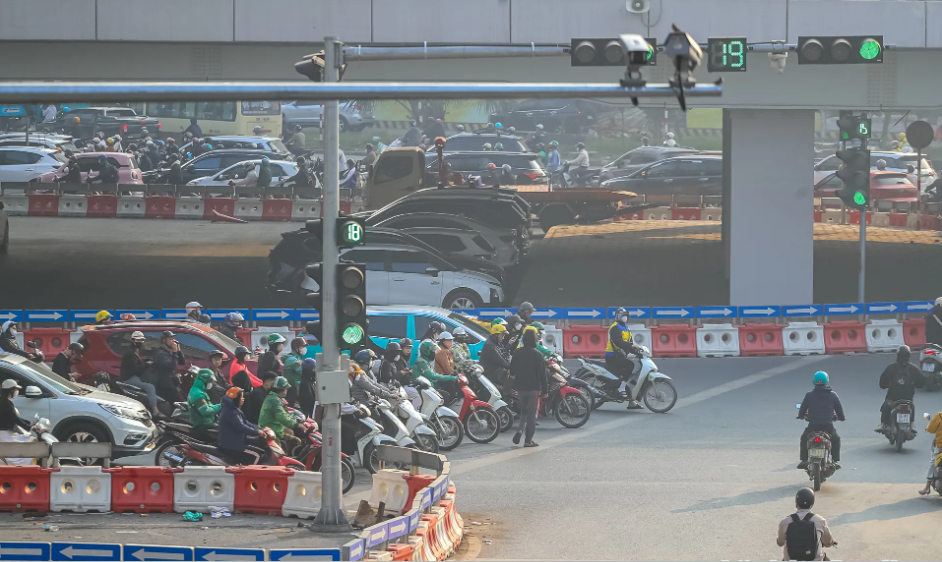
AI cameras have catalyzed positive changes in driver conduct. Photo: Duy Minh/The Hanoi Times
Beyond traffic enforcement, the AI camera system addresses urban order and environmental sanitation issues, such as sidewalk obstructions and improper waste disposal.
Colonel Pham Quang Huy, Deputy Director of the Traffic Police Department under the Ministry of Public Security, stated on the Vietnam Government Portal that the AI camera system fosters more civilized urban behavior while mitigating congestion at major intersections.
“The AI camera system prioritizes prevention over punishment, fostering voluntary and sustainable compliance with traffic laws. We will continue operating the system alongside public awareness campaigns, especially during the Lunar New Year (Tet) holiday and major national events,” Huy explained.
Lieutenant Colonel Dao Viet Long, Deputy Head of the Hanoi Traffic Police Division, detailed that the system employs eight-megapixel cameras operating at 50 frames per second, automatically analyzing images and storing data centrally for up to 75 days.
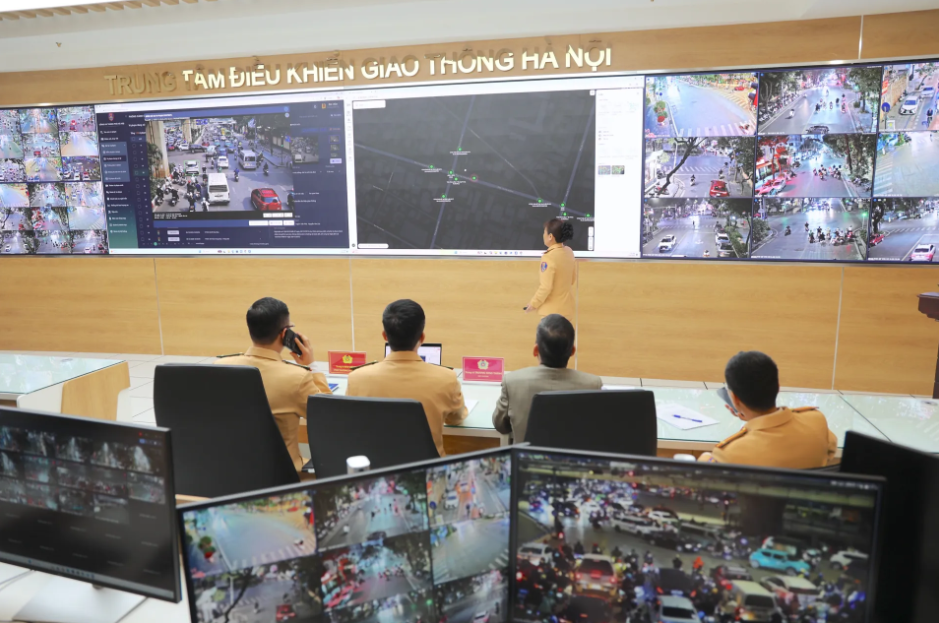
Hanoi Police leverage cameras to optimize traffic flow. Photo: Pham Cong/The Hanoi Times
The AI camera system autonomously detects and processes up to 23 types of traffic violations, recognizes license plates, and accurately records infractions, significantly reducing the need for on-street traffic police presence.
Long highlighted that, compared to traditional surveillance cameras, AI cameras analyze and process images directly at the device level, enabling faster and more precise detection of traffic violations and public order incidents.
These cameras also automatically count traffic flows, adjust signal cycles in real time to minimize congestion, and transmit violation data to the command center with precision.
“AI camera systems are indispensable for tackling Hanoi’s most pressing traffic challenges, ensuring road safety, and maintaining order,” Long emphasized.

