THE HANOI TIMES — Nestled within Hanoi’s Dong Anh Commune, Hoa Lam Vien (the Royal Palace) offers a rare glimpse into the political vision, spiritual life, and court culture that shaped Dai Viet during the formative years of the Ly Dynasty.
This majestic Ly Dynasty palace once served as both a royal residence and a powerful symbol of political authority, Buddhist thought, and court aesthetics in the early history of Thang Long.
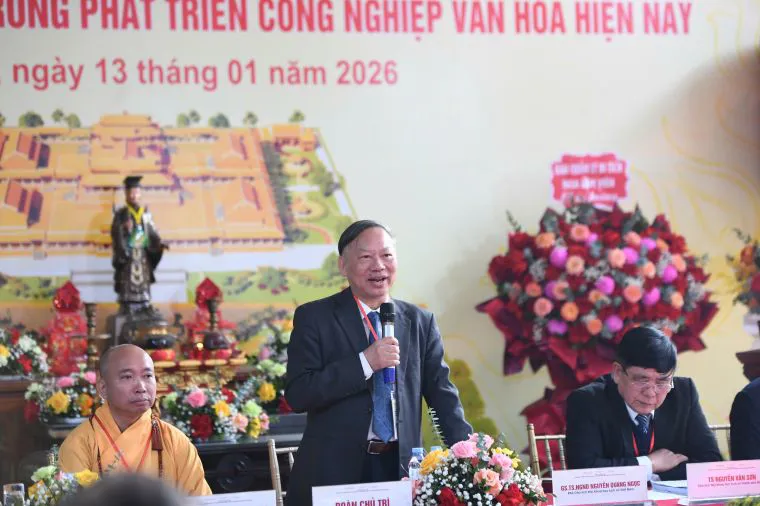
Professor-Doctor Nguyen Quang Ngoc, Vice President of the Vietnam Historical Science Association, delivers insights at the seminar. Photos: Pham Sy/The Hanoi Times
Recent archaeological discoveries at Hoa Lam Vien hold exceptional value, according to Prof. Dr. Nguyen Quang Ngoc, Vice President of the Vietnam Historical Science Association, during a seminar held on January 13 at Phuc Lam Pagoda in Dong Anh Commune.
Key findings include a pair of stone mythical creatures adorned with Ly motifs, bases of scripture pillars, lotus-shaped stone pedestals, and bricks intricately carved with Ly patterns, he noted.
These relics vividly reflect the cultural, political, and spiritual life of the era, cementing Hoa Lam Vien’s unique place in Vietnam’s national history, Ngoc emphasized.
Comparing Hoa Lam Vien to other Ly royal palaces, Associate Professor Nguyen Thi Phuong Chi ranked it second only to the Thang Long citadel in historical significance.
Unlike palaces primarily used for royal tours, Hoa Lam Vien also served as a center for ancestor worship, distinguished by its profound religious, political, and ecological character, she added.
Chi highlighted that studying Hoa Lam Vien not only helps reconstruct the architecture of royal palaces outside the capital but also deepens our understanding of Dai Viet’s governance system and cultural identity during this pivotal historical period.
Transforming the Relic into a Creative Hub
During the seminar, scholars proposed practical solutions to preserve and promote Hoa Lam Vien through sustainable approaches that harmonize conservation with development.
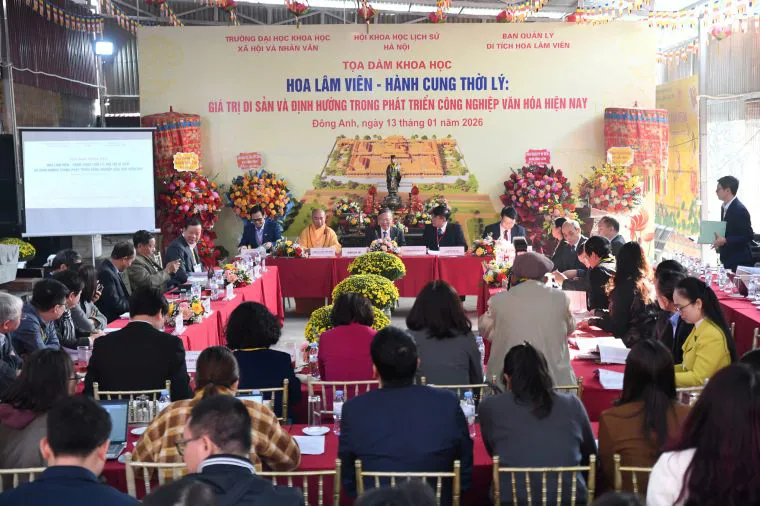
The seminar brought together numerous cultural and historical researchers.
They suggested transforming the site into a catalyst for cultural industry growth in Dong Anh, aligning with Hanoi’s strategy to position culture as a key economic driver.
Ngoc from the Vietnam Historical Science Association emphasized that Hoa Lam Vien’s historical and spiritual richness makes it an invaluable resource for developing heritage tours linked to the Co Loa heritage axis.
Dr. Bui Van Tuan from the Hanoi Institute of Studies and International Training argued that integrating Hoa Lam Vien into a cultural industry framework could transform heritage from a relic of the past into a source of creative inspiration, generating new economic, social, and cultural value while engaging local communities.
He added that Ly cultural elements could inspire artistic creation, design, films, exhibitions, educational games, and digital products, fostering connections across multiple fields within Hanoi’s cultural industry ecosystem.
Echoing this perspective, Dr. Bui Thi Thu Phuong from the Thang Long-Hanoi Conservation Center proposed developing a heritage route connecting Co Loa, Hoa Lam Vien, and the Thang Long Imperial Citadel, guiding visitors through key milestones from the 2nd century BC to the 12th century AD.
Experts also recommended leveraging digital tools such as AR, VR, digital heritage maps, and automated guides to enhance visitor experiences.
Strategically positioning Hoa Lam Vien within the Thang Long–Hanoi heritage network could expand the cultural industry footprint north of the Red River, adding historical depth to the capital’s urban landscape.

A dragon statue from the Ly Dynasty discovered at the Thang Long Imperial Citadel. Photo: Trinh Nguyen/The Hanoi Times
Lunar New Year’s Eve Loses Its Magic Without Tao Quan
THE HANOI TIMES — For countless families in Hanoi, the potential absence of the Tao Quan television show signifies more than the loss of a beloved comedy. It marks the disappearance of a cherished tradition—a quiet, reflective pause that has long defined the final night of the Lunar New Year. Rooted in Vietnamese and broader […]
Strolling Through Time: Hanoi’s Living Legacy
THE HANOI TIMES — Hanoi is transforming memories into motion with a groundbreaking experiential walking tour around Truc Bach Lake. This immersive journey invites visitors to delve into the heart of the capital’s traditions, cuisine, crafts, and daily life, turning heritage from a static display into a vibrant, sensory adventure. Launched on December 27 by […]
Celebrating Vietnam’s Educational Heritage: An Art Exhibition at the Temple of Literature
THE HANOI TIMES — The art exhibition, “A Thousand Years of Learning,” opened on December 30 at the Van Mieu – Quoc Tu Giam (Temple of Literature), honoring Vietnam’s enduring legacy of scholarship, respect for educators, and the timeless educational values that have shaped the nation’s cultural identity. Curated by the “Ancient Traces of Culture” […]
Hanoi Ao Dai Tourism Festival 2025: Experience Heritage Like Never Before

THE HANOI TIMES — Hanoi is set to dazzle as the 2025 Hanoi Ao Dai Tourism Festival returns from November 7 to 9, celebrating Vietnam’s iconic traditional attire and showcasing the city’s rich cultural heritage. Hosted at the Hanoi Museum in Tu Liem Ward and along the picturesque Hoan Kiem Lake walking street, this three-day […]
Dien Bien Gears Up for the Vietnam-Laos-China Ball-Throwing Festival
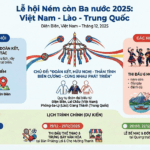
The northern province of Dien Bien is in the final stages of preparation for the highly anticipated ninth Vietnam-Laos-China Ball-Throwing Festival, scheduled to take place from December 19 to 21, as confirmed by a local official.