
THE HANOI TIMES — Giang Vo Ward’s establishment marks a pivotal step in Hanoi’s administrative modernization, creating a dynamic urban hub that seamlessly blends historical heritage with contemporary living and tourism appeal.
Hanoi’s New Urban Epicenter
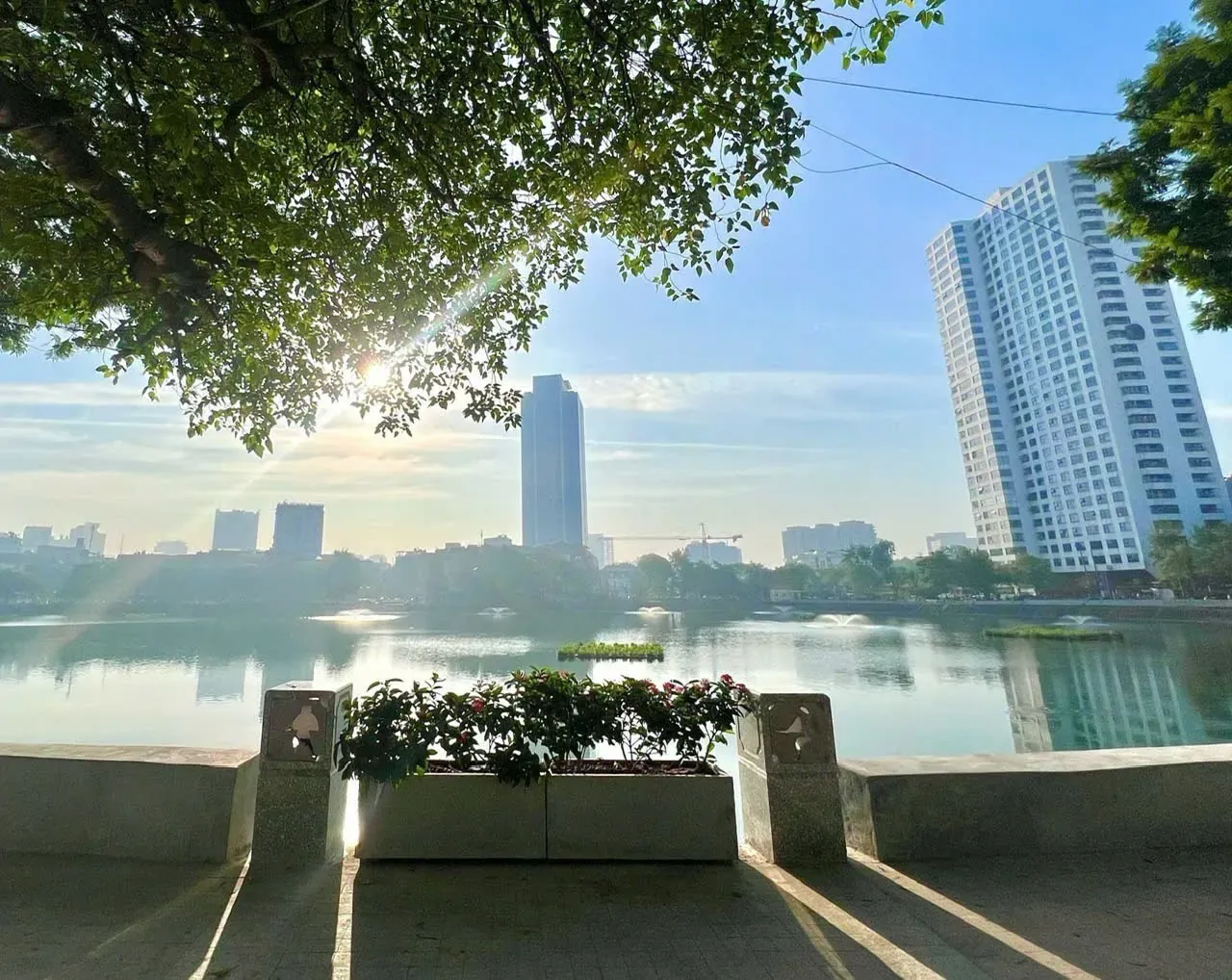
The serene beauty of Ngoc Khanh Lake, Giang Vo Ward, Hanoi. Photo: Thuy Tien/ The Hanoi Times
Officially launched on July 1, 2025, Giang Vo Ward integrates the territories and populations of seven former wards from Ba Dinh and Dong Da districts. Spanning 2.60 square kilometers and home to 97,034 residents, it stands as a densely populated and energetic core within the capital.
The name Giang Vo carries profound historical and cultural significance, tracing its origins to the Giang Vo Military School established in 1010 under the Ly Dynasty. This institution once served as a royal training ground for military personnel. Retaining this name honors the area’s legacy while ensuring administrative continuity and public recognition.
Strategically located, Giang Vo Ward borders key areas such as O Cho Dua, Ba Dinh, Ngoc Ha, Nghia Do, Lang, Cau Giay, and Dong Da. It is well-connected through major transport arteries, including Giang Vo Street, Lang Ha Street, Nguyen Chi Thanh Street, and the Cat Linh–Ha Dong Metro Line.
As a thriving urban center, the ward hosts major commercial hubs, national agencies, prestigious universities, and state-of-the-art infrastructure. It harmoniously combines historic apartment complexes with bustling businesses and offers top-tier public amenities, including the National Cinema Center, libraries, cultural venues, and outdoor sports facilities.
A Cultural and Tourist Haven
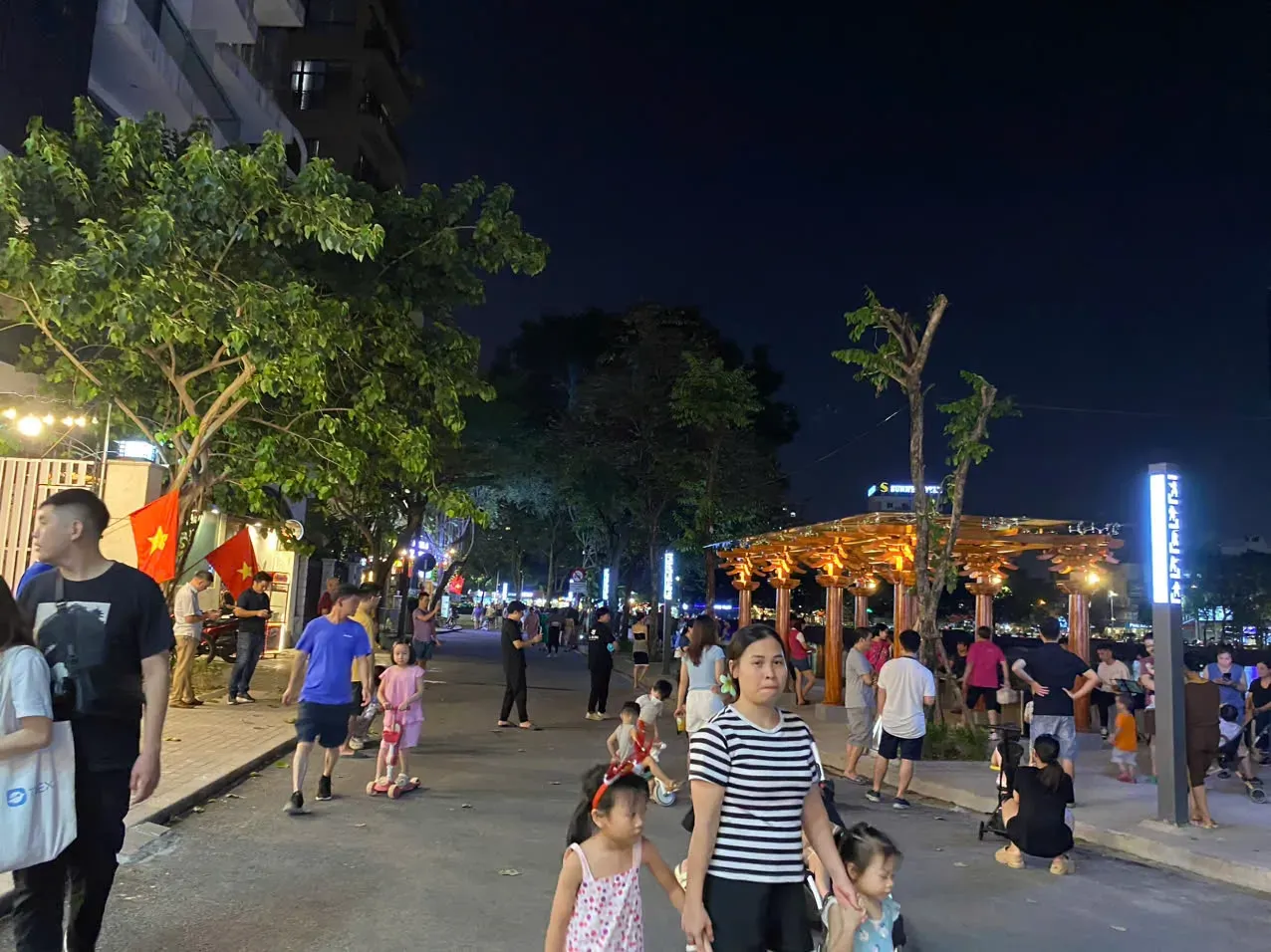
The pedestrian promenade encircling Ngoc Khanh Lake. Photo: Thuy Tien/ The Hanoi Times
Giang Vo is a treasure trove of cultural heritage and historical importance, boasting numerous recognized relics such as Giang Vo Communal House, Thanh Cong Communal House, and Cat Linh Pagoda. Traditional festivals, folk games, and performances like Cheo and Quan ho singing remain vibrant local traditions.
One of its most captivating landmarks is the Ngoc Khanh Lake walking street, a tranquil green oasis with a hidden historical secret. Beneath the 3.6-hectare lake lie the remnants of Giang Vo Hall, the site of the National Military School from the Ly, Tran, and Le dynasties.
According to the Complete Annals of Dai Viet, the Giang Vo Military School was founded in 1010 under the Ly Dynasty, followed by the Archery Hall in 1070. These institutions served as early military academies, training royal guards and national troops in martial arts and combat techniques.

Ancient weapons discovered beneath Ngoc Khanh Lake, now exhibited at Hanoi Museum. Photo: Jenna Duong
In August 1253, Emperor Tran Thai Tong transformed the site into a formal military training ground. Giang Vo Hall became central to teaching military strategy, practicing martial arts, and conducting drills during the Tran and subsequent dynasties.
By 1481, under the Le Dynasty, the area expanded, and the Giang Vo Military School continued as a training ground for soldiers and cavalry.
Interest in the site’s historical value resurged in the 1960s with the discovery of ancient weapons. A breakthrough occurred in March 1983 during the expansion of Ngoc Khanh Lake, when construction crews unearthed a wealth of artifacts, including weapons, ceramics, and architectural fragments made of wood and terracotta.
These findings sparked an archaeological investigation, leading to extensive excavations. By 1984, two scientific conferences organized by the Ministry of Culture confirmed that the Ngoc Khanh Lake area was once part of the National Military School of the Le Dynasty (1428–1527). Thousands of artifacts were recovered and entrusted to the Hanoi Museum for preservation and research.

Archaeologists excavating relics beneath Ngoc Khanh Lake in 1983. File Photo
Nguyen Tien Da, Director of the Hanoi Museum, highlighted the discovery’s importance: “Throughout our thousand-year history of nation-building and defense, our ancestors valiantly resisted foreign invasions. While people were the decisive factor in those victories, weapons played a crucial supporting role. Studying these artifacts deepens our understanding of how past generations safeguarded the nation.”
He also noted the scarcity of historical records on military training in ancient Vietnam, particularly material evidence. Although Giang Vo Military School has been documented since the Le Dynasty, its structure and function remain largely unknown. The recent discoveries thus provide invaluable insights for scholars exploring Vietnam’s military heritage.
Giang Vo Ward, with its unique fusion of ancient heritage, vibrant urban life, and modern connectivity, is poised to become both a livable community for residents and a must-visit cultural destination for tourists.
Vietnam’s Cultural Duality: Exploring the Vibrant Contrast Between Hanoi and Ho Chi Minh City

THE HANOI TIMES — In a captivating feature titled *”Hanoi or Ho Chi Minh City – Find Out Which One’s Right for You,”* published by *National Geographic Traveler*, writer Daniel Stables delves into the distinct charm and allure of Hanoi and Ho Chi Minh City. His insightful exploration aims to guide international travelers in choosing […]
Celebrating the Lunar New Year with a Bang: Vietnam’s Night Sky Illuminated by Fireworks

The skies across Vietnam erupt in a dazzling display of fireworks to ring in the Lunar New Year. It’s a spectacular sight that captivates the nation, as vibrant colors light up the night sky, marking the country’s most important and celebrated holiday.
Hanoi: A City of Enchantment and Wonder for Travelers in 2025

Hanoi, the vibrant capital of Vietnam, has been recognized by the esteemed UK-based travel authority, Time Out, as one of the top 50 global destinations to explore in 2025.
The Captivating Serpentine Lacquerware Collection

Embark on a journey into the heart of Vietnamese culture and artistry with the captivating “Thach Ong Xa” collection. This exquisite range of lacquered statues celebrates the Year of the Snake, 2025, with a unique and enchanting twist.