THE HANOI TIMES — Nguyen Phuong Hoa, Director of the Department of International Cooperation under the Ministry of Culture, Sports and Tourism, emphasized that law acts as both a protective shield and a connecting bridge, safeguarding local cultural identity amidst the tide of globalization.
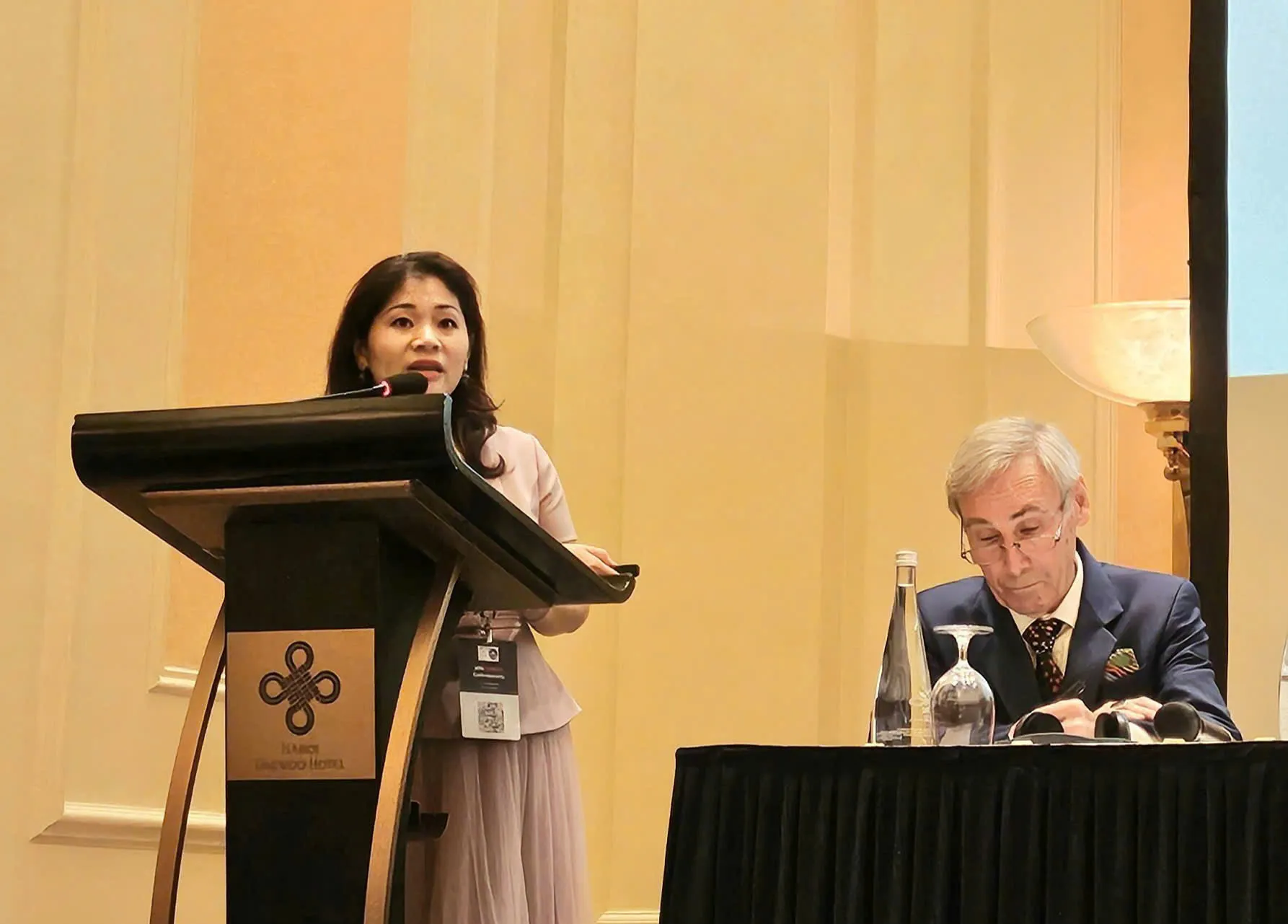
Nguyen Phuong Hoa, Director of the Department of International Cooperation, delivers a keynote speech at the conference. Photos: Anh Kiet/The Hanoi Times
Speaking at the 38th LAWASIA Conference held in Hanoi this week, Hoa highlighted culture as a pivotal driver of development. She asserted that the rights to access, create, participate in, and enjoy cultural life are fundamental human rights.
“Cultural rights are an integral pillar within the global human rights framework. Vietnam’s legal system explicitly recognizes and protects these rights,” Hoa stated.
She further described culture as a strategic tool in Vietnam’s international relations. “As Vietnamese culture resonates globally, it elevates the nation’s standing. Cultural exchanges foster deeper friendship and understanding between Vietnam and other countries.”
Despite these advancements, challenges persist, including inconsistent law enforcement, the risk of commercializing traditional culture, and conflicts between modern legal frameworks and traditional customs.
Vietnam’s legal system prioritizes cultural preservation through legislation such as the Law on Cultural Heritage, updated in 2024. This law focuses on modernizing management, digital transformation, and the repatriation of cultural artifacts.
Leveraging Heritage for Socio-Economic Development
According to Lawyer Nguyen Van Hoa, Director of ASL Law Firm in Ho Chi Minh City, the Law on Cultural Heritage 2024 comprises 95 articles across nine chapters. These provisions govern the management, protection, and promotion of Vietnam’s cultural heritage.
He explained that all cultural heritage within Vietnam’s territory, regardless of origin or ownership, will be managed and safeguarded in accordance with the law. “Vietnamese cultural heritage located abroad will be protected under international law and relevant treaties to which Vietnam is a signatory,” Hoa told The Hanoi Times.
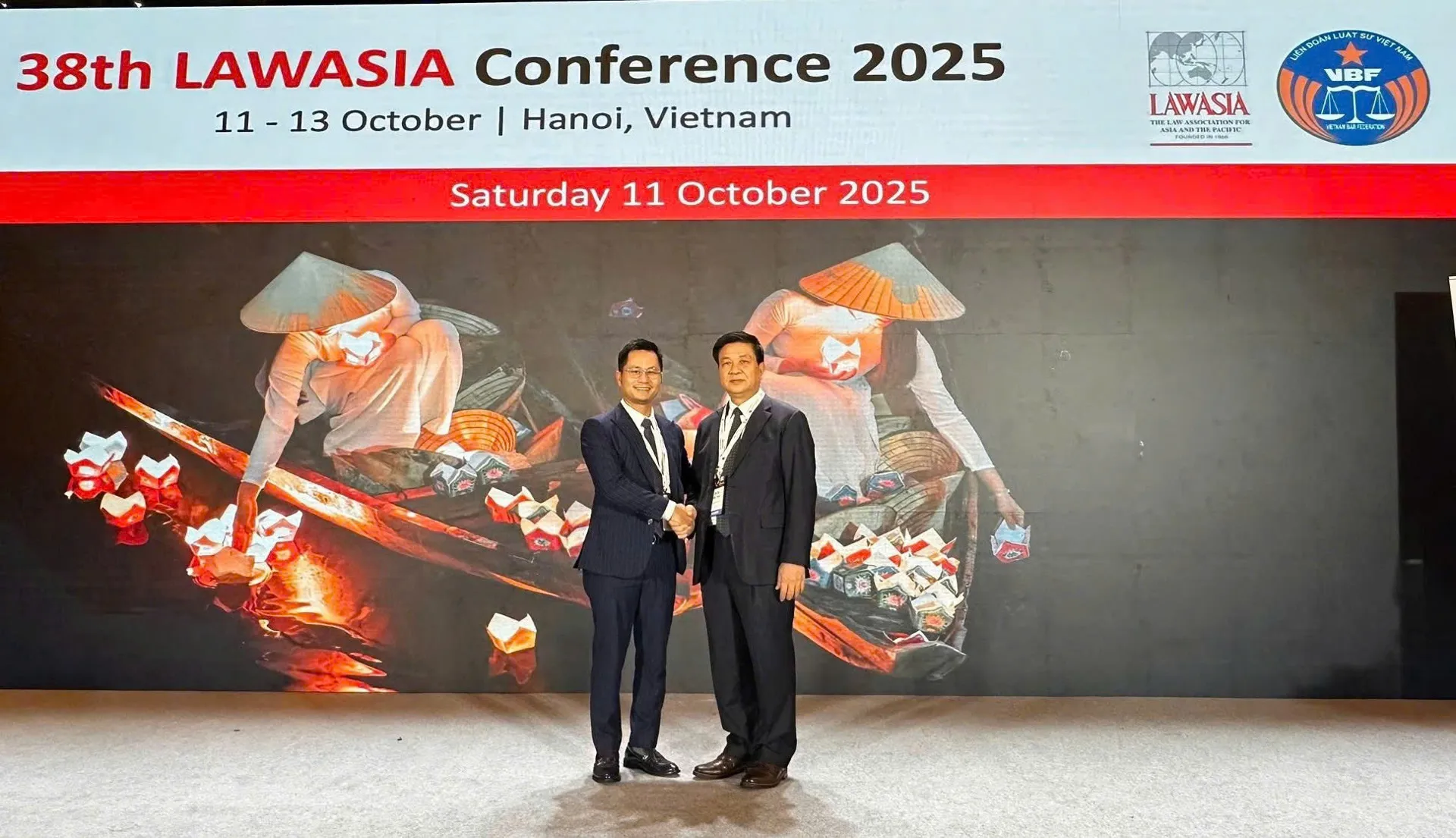
Lawyer Nguyen Van Hoa (left) and Dr. Do Ngoc Thinh, President of the Vietnam Bar Federation, engage in discussion at the conference.
Dr. Do Ngoc Thinh, President of the Vietnam Bar Federation, highlighted that recent amendments to the Law on Cultural Heritage aim to transform cultural heritage into economic assets, supporting sustainable development.
“There has been a significant shift in mindset, moving from mere conservation to actively promoting heritage values in socio-economic development,” Thinh noted.
He told The Hanoi Times that Vietnam’s participation in regional legal forums like LAWASIA 2025 underscores its commitment to protecting and promoting national cultural values. This engagement affirms the role of culture in Vietnam’s development strategy within the context of globalization.
Insights from the Conference
The 38th LAWASIA Conference, known for fostering cross-border engagement, provided invaluable insights into pressing legal and social issues shaping the region.
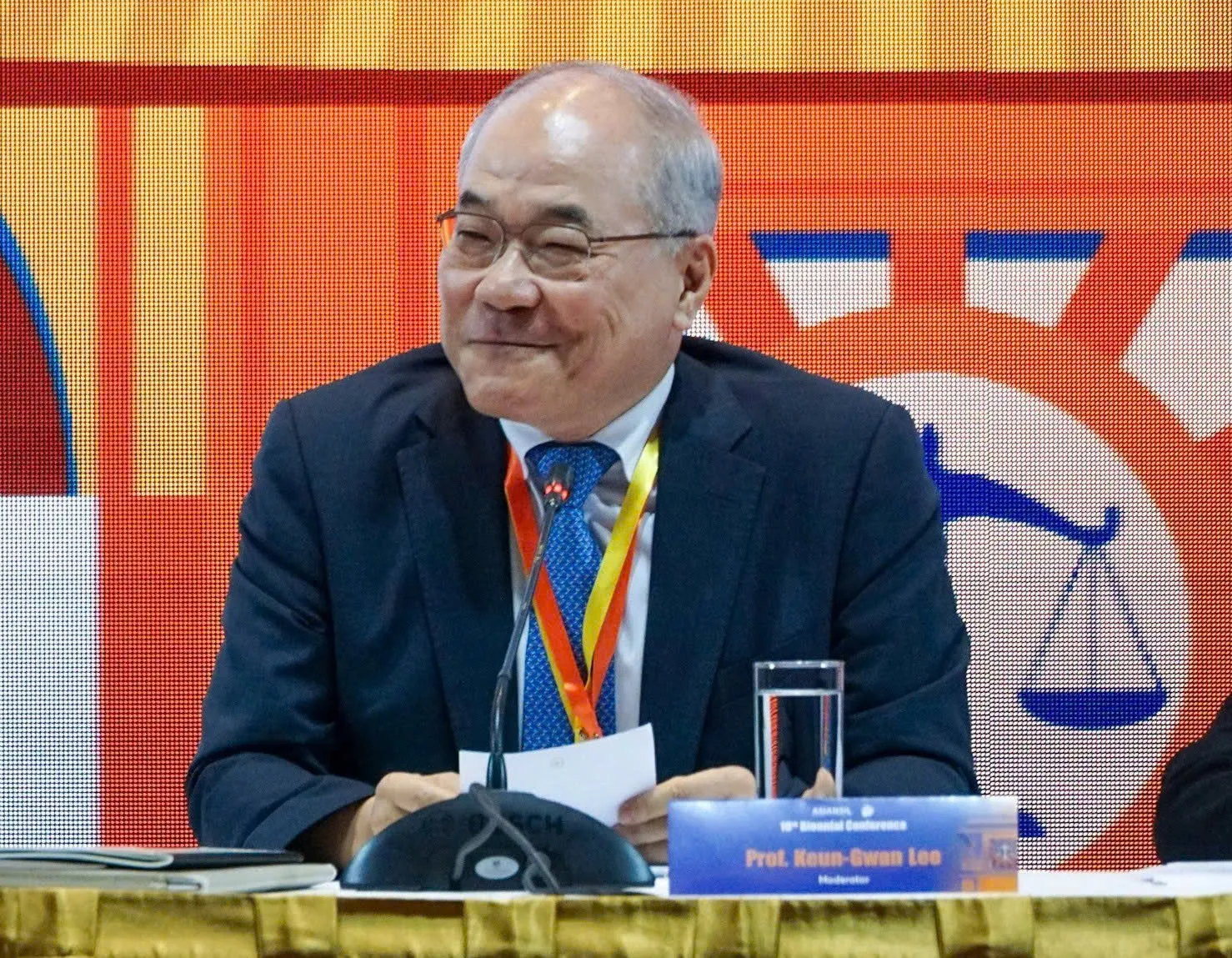
Professor Keun-Gwan Lee, Member of the United Nations International Law Commission, shares his perspective.
Professor Keun-Gwan Lee, a member of the United Nations International Law Commission, praised the conference’s setting in Hanoi, a city that seamlessly blends ancient heritage with modern growth. He described the event as intellectually enriching and culturally memorable.
“Hosting LAWASIA 2025 highlights the Vietnam Bar Federation’s active role in regional legal cooperation, showcasing Vietnam as a dynamic, friendly, and law-abiding nation,” Keun-Gwan Lee remarked to The Hanoi Times.
He emphasized that the successful hosting of the event in Vietnam demonstrates its organizational prowess, academic contributions, and proactive spirit of international integration.
On October 13, discussion sessions focused on core issues of contemporary international law from Asian perspectives, as part of the three-day conference.
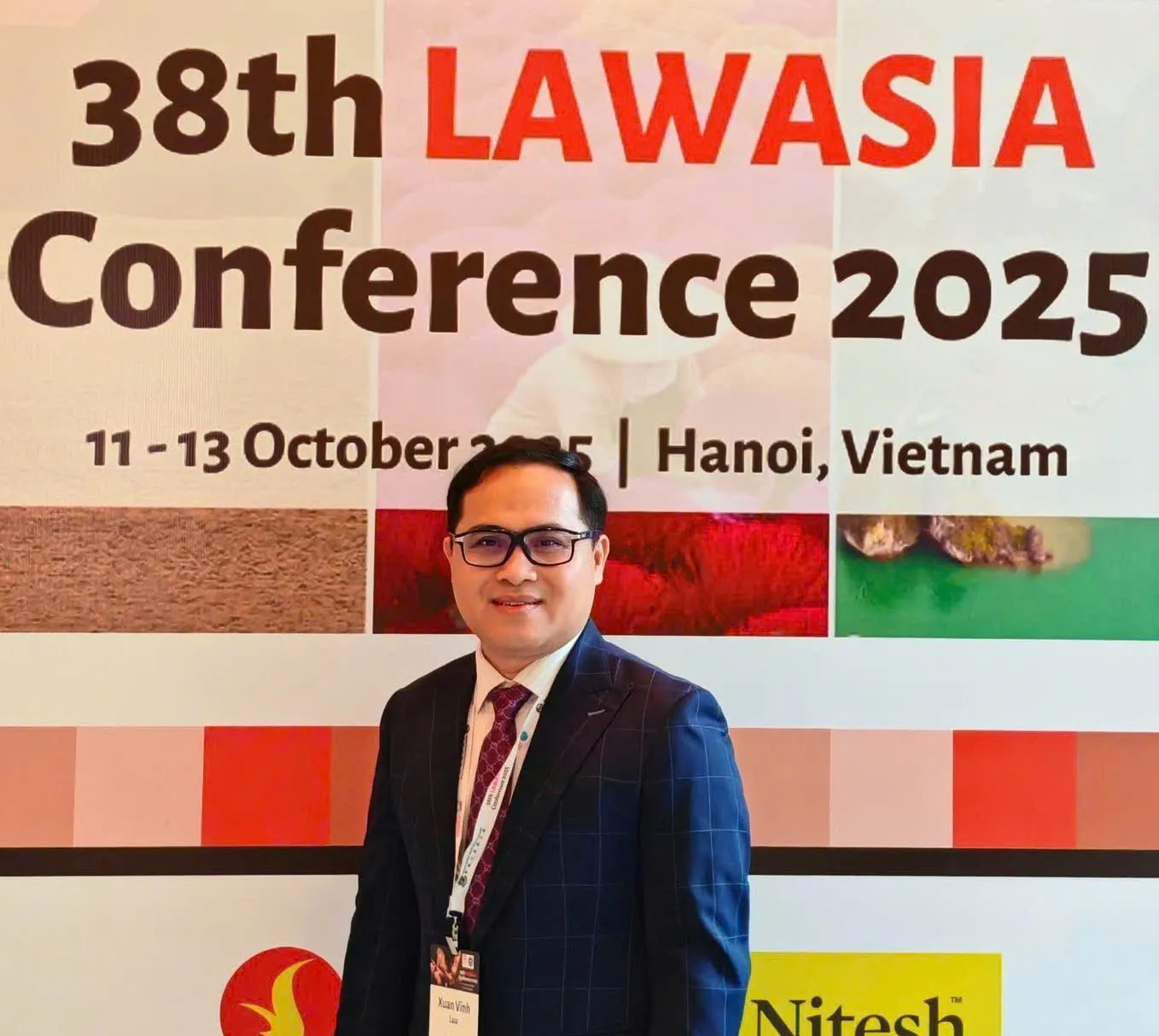
Luu Xuan Vinh, Executive Attorney of Asia Legal Business Law Firm, addresses the conference.
Scholars agreed that Asia is emerging as a key player in shaping global law, while emphasizing the need for an independent “Asian legal thinking” that reflects the region’s historical, political, and cultural context. This approach aims to contribute to a fair and sustainable international legal order.
“LAWASIA 2025 offers a platform to showcase Vietnam’s legal system and achievements to international peers, highlighting judicial reforms, open-door policies, and socio-economic development,” said Luu Xuan Vinh, Executive Attorney of Asia Legal Business Law Firm in Hanoi.
Nguyen Thi Lan Anh, Vice President of the Asian Society of International Law, noted that in an unpredictable global landscape, Asia is actively shaping international law to uphold order, cooperation, and fairness.
“Asia is increasingly influential in the evolution and enforcement of international law, enhancing its role to uphold core principles and drive progressive regional development,” Lan Anh stated.
She expressed pride in Vietnam’s role as co-host of the conference, which connects legal professionals across the region to advance a shared vision of a professional, reputable, and community-oriented legal profession.
As the 38th LAWASIA Conference concluded, Vietnam reaffirmed its vision of law as a bridge between heritage and progress. By integrating legal innovation with cultural preservation, Vietnam not only safeguards its cultural roots but also projects a confident image of a nation growing through understanding, cooperation, and respect for human dignity.
Hanoi: Preserving Cultural Essence Amidst Urban Transformation
THE HANOI TIMES — Hanoi’s ambitious 2025–2030 development plan, guided by the forthcoming 18th Party Congress (October 15-17), is dedicated to safeguarding the city’s millennia-old heritage while embedding culture as the cornerstone of its progress. As the 2020–2025 term concludes, its legacy is unmistakable. Amidst soaring skyscrapers and vibrant creative hubs, Hanoi’s essence endures—in its […]
Vietnam Unveils the Ao Dai Cultural Association: Celebrating a Timeless National Icon
THE HANOI TIMES — On August 9, the Hanoi Opera House will host the official launch of the Vietnam Ao Dai Cultural Association, a dedicated community uniting Vietnamese and global enthusiasts in their mission to preserve and celebrate the cultural significance of the iconic ao dai. Building upon the legacy of the Vietnam Ao Dai […]
Hanoi’s Timeless Village Gates: A Journey Through History
THE HANOI TIMES — Amidst the bustling rhythm of modern Hanoi, the village gates along Thuy Khue Street stand as silent sentinels, preserving tales of a bygone era and safeguarding their unique identity. Thuy Khue Street, nestled along the serene West Lake, boasts iconic village gates from Dong Xa, Yen Thai, Ho Khau, and Thuy […]
Preserving a Historical Legacy: PM Modi Commends the Kuwait Heritage Society’s Efforts in Conserving India-Kuwait Artefacts

Official Spokesperson of the Ministry of External Affairs, Randhir Jaiswal, confirmed that Prime Minister Narendra Modi had a fruitful meeting with Fahad Ghazi Alabduljaleel, the esteemed President of the Kuwait Heritage Society, on Sunday in Kuwait.
The Shifting Geopolitical Tides: How Altered Dynamics in the Indo-Pacific Ocean Reshape Global Equilibrium

The geopolitical landscape of the Indo-Pacific region is a dynamic tapestry, with the delicate balance of power between nations holding sway over global trade routes. This intricate dance of diplomacy has a profound and immediate impact on the availability and pricing of goods that we often take for granted. What may seem like a distant political chess match is, in fact, a tangible force that shapes our everyday lives. The ripples caused by these shifting alliances are far-reaching and complex, going beyond the simple “butterfly effect.” This region, the cradle of world trade, is a critical juncture where decisions made today will have consequences that echo far into our future, affecting us all in ways we may not immediately comprehend.