THE HANOI TIMES — In a groundbreaking move, Hanoi is set to launch its most ambitious subsidy program for electric motorbikes, offering up to VND20 million (US$800) in support for low-income households. This initiative is part of a draft resolution aimed at phasing out gasoline-powered vehicles in the capital, marking a significant step toward a greener future.
Residents transitioning from gasoline motorbikes to electric models priced at VND10 million (US$400) or higher will be eligible for a subsidy of up to VND5 million (US$200). The policy is a key component of the draft resolution on promoting clean-energy road vehicles, expected to be approved by the Hanoi People’s Council during its 28th session from November 26 to 28.
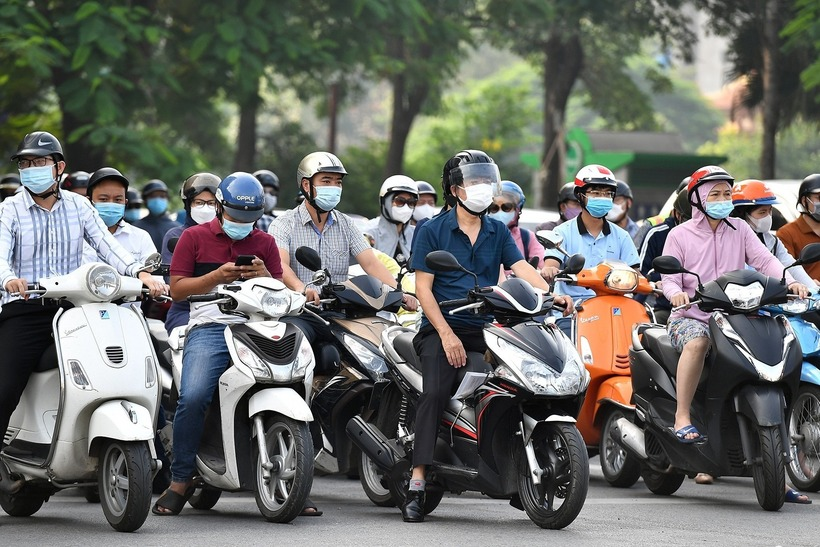
Hanoi encourages residents to embrace electric motorbikes as a cleaner alternative. Photo: The Hanoi Times
The subsidy program targets residents with permanent residency or at least two consecutive years of living in Hanoi who own gasoline motorbikes and are willing to switch to electric models priced from VND10 million. The support amounts to 20% of the new vehicle’s value, capped at VND5 million (US$200) for general residents, VND20 million (US$800) for low-income households, and VND15 million (US$600) for near-poor households. Each eligible individual can receive support for one vehicle from the resolution’s effective date until January 1, 2031.
Additionally, the city will cover 50% of the fees for issuing license plates and registration certificates for motorbikes converted to clean-energy models until January 1, 2031. Low-income and near-poor households will receive full support for these fees.
To further incentivize the shift, the city budget will subsidize 30% of loan interest for individuals purchasing clean-energy motorbikes through installment plans from financing companies or commercial banks, with repayment terms not exceeding twelve months.
Passenger transport companies operating taxis and buses that transition to clean-energy vehicles while retaining their existing identification plates will receive full support for registration fees. Companies offering self-drive rental services using clean-energy vehicles for public transport and utilizing temporary on-street parking will be exempt from street and sidewalk parking fees for up to five years.
In a bid to reduce private vehicle usage, the city will waive fares for mass transit services for veterans, persons with disabilities, senior citizens, children under six, low-income households, students, and industrial-park workers.
Expanding the Public Clean-Energy Charging Network
Local authorities will identify and propose suitable locations for public clean-energy charging stations based on actual demand. By January 1, 2030, parking areas in apartment buildings, commercial towers, hospitals, and other public facilities within Ring Road 3 must convert at least 15% of their parking spaces into public clean-energy charging stations.
Newly constructed facilities are required to install charging stations for at least 30% of their total parking spaces. Road infrastructure, including streets, bridges, tunnels, bus stations, parking lots, and rest stops within Ring Road 3, must also convert at least 15% of parking spaces into clean-energy charging stations by January 1, 2030. Newly built road infrastructure must allocate at least 30% of total parking spaces for this purpose.
The city will provide financial support, covering 30% of bank loan interest or granting access to the city’s development investment fund for up to five years for companies investing in public clean-energy charging infrastructure. Additionally, the city budget will cover 50% of site clearance costs and full land rent for the first five years for investment projects related to charging stations.
Projects to build public clean-energy charging stations will proceed directly to investment approval without the need for separate procedures related to investment guidelines.
This comprehensive policy framework aligns with the 2024 Capital Law on environmental protection and Directive 20, issued by the Prime Minister on July 12, which outlines urgent measures to combat pollution. Under Directive 20, Hanoi will implement a phased ban on gasoline motorbikes inside Ring Road 1 starting July 1, 2026, expanding to Ring Road 2 in 2028 and Ring Road 3 in 2030, alongside restrictions on gasoline cars.
Currently, Hanoi is home to 6.9 million motorbikes, with approximately 450,000 within Ring Road 1. At a July environmental forum, Vice Chairman of the Hanoi People’s Committee Duong Duc Tuan highlighted research indicating that gasoline motorbikes contribute up to 60% of the city’s air pollution, with nearly 70% of the fleet consisting of older vehicles whose emissions are challenging to control.
Hanoi’s International Craft Village Festival: Celebrating and Preserving Global Heritage
THE HANOI TIMES — Artisans from around the globe have converged in Hanoi to celebrate cultural heritage, creativity, and sustainable design at the 2025 International Craft Village Conservation and Development Festival. This prestigious event is currently taking place within the UNESCO-recognized Thang Long Imperial Citadel. With over 350 booths representing 30 countries and territories, the […]
Ba Vi National Park Illuminated by Wild Sunflowers

THE HANOI TIMES — As November and December unfold, the countryside surrounding Hanoi transforms into a golden paradise. The hills of Ba Vi National Park erupt in a dazzling display of wild sunflowers, beckoning travelers to witness nature’s fleeting masterpiece. Vibrant wild sunflowers in full bloom signal the gentle arrival of winter’s embrace. Visitors to […]
Hanoi Students Triumph at 2025 World Young Physicists Olympiad in Indonesia

THE HANOI TIMES — Five Hanoi students triumphed at the 2025 World Young Physicists Olympiad (WYPO) in Bali, Indonesia, clinching three silver and two bronze medals for Vietnam. Hanoi’s young physicists at the 2025 WYPO. Photo: MoET The Ministry of Education and Training (MoET) announced silver medalists Nguyen Ba Tung Lam (Hanoi Star Primary and […]
Hanoi Prioritizes Comprehensive Policies and Infrastructure for Enhanced Waste Sorting and Management
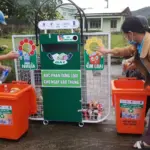
THE HANOI TIMES — Hanoi’s journey toward a greener urban model hinges on a synchronized waste management system, upgraded infrastructure, and incentives for environmental businesses. These elements are crucial for enhancing waste treatment and management as the city evolves. Dang Thanh Vinh, Deputy Head of the Solid Waste Management Division at the Hanoi Department of […]
Secret Garden’s 30th Anniversary World Tour Brings Acclaimed Artists to Hanoi

Following a 15-hour journey from Oslo, Norway, Secret Garden’s core members, Fionnuala Sherry and Rolf Løvland, touched down at Hanoi’s Noi Bai International Airport on October 16. They were poised to deliver a special performance at the National Convention Centre just two days later.