
THE HANOI TIMES — Hanoi is advancing its citywide waste segregation initiative as part of a comprehensive effort to enhance urban cleanliness and environmental sustainability. However, translating policy into practice remains a significant challenge, according to Pham Van Duc, General Director of the Hanoi Urban Environment Limited Company (URENCO).
Duc identifies several key obstacles, including incomplete regulations, inadequate infrastructure, limited treatment facilities, and low public awareness regarding proper household waste classification.
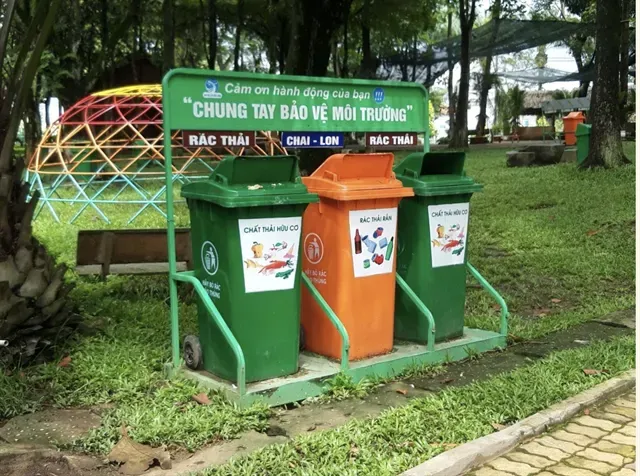
Color-coded garbage bins for different waste types at Hoan Kiem Lake, Hanoi. Photo: Hanoimoi
“A primary reason previous waste segregation initiatives failed was the lack of resident engagement in environmental protection and the absence of a waste sorting habit at the source,” Duc explained to The Hanoi Times.
To address this, Hanoi households are now mandated to categorize domestic waste into three distinct groups before disposal, effective January 8, as outlined in Decision 87 by the municipal People’s Committee. This marks the most significant overhaul of waste management in the capital in a decade.

Nguyen Trong Nhat, Head of the Environmental Management Division, Hanoi Department of Agriculture and Environment. Photo: Anh Kiet/The Hanoi Times
Under this regulation, household waste must be segregated at the source into recyclables, food waste, and hazardous materials, promoting a cleaner environment and improved public health.
Recyclables include paper, plastic, wood, rubber, and electrical equipment. Food waste and kitchen scraps constitute the second category. The third category comprises bulky items and hazardous waste such as pesticide containers, paint, used batteries, and accumulators.
Nguyen Trong Nhat, Head of the Environmental Management Division, notes that Hanoi has standardized waste containers by color. Food waste is placed in leak-proof, odor-resistant green containers, while other household waste goes into grey containers. Hazardous waste must be stored in corrosion-resistant, waterproof packaging to prevent environmental leakage.
Recyclables can be directly handed to recycling operators, stored at home for periodic collection by municipal services, or taken to designated collection points as scheduled by local authorities.
“Waste collectors are authorized to reject unsorted waste and report violations to local authorities for penalties. This applies to individuals, households, and organizations generating less than 300 kilograms of domestic waste daily,” Nhat stated in an interview with The Hanoi Times.
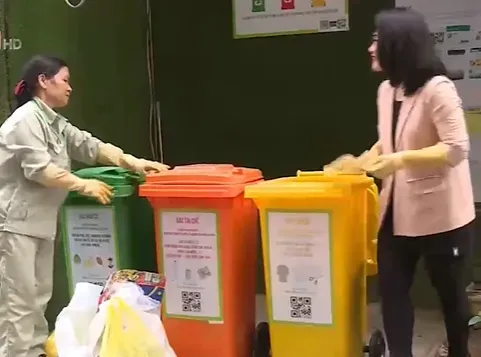
Nguyen Thi Quynh, a Hanoi-based teacher (right), sorts domestic waste before disposal. Photo: Anh Kiet/The Hanoi Times
Non-compliance with waste sorting regulations at the source can result in fines ranging from VND500,000 (US$19) to VND1 million ($38) for individuals and VND1 million ($38) to VND2 million ($76) for organizations. Waste collection units may refuse to collect unsorted garbage.
Nguyen Thi Quynh, a 42-year-old teacher and environmental advocate, emphasizes the effectiveness of environmental fees and penalties in enforcing waste classification. “I actively minimize non-degradable waste, collect recyclables, and deliver them to collection points every Saturday,” Quynh shared with The Hanoi Times.
Hanoi’s Waste Sorting Program Faces Challenges After Five Years
Vietnam’s Environmental Protection Law 2020, which mandates household solid waste classification, represents a pivotal shift in waste management, emphasizing strategic vision and shared environmental responsibility.
Effective waste sorting reduces landfill waste, minimizes leachate generation, and mitigates environmental risks such as soil contamination and groundwater pollution. While pilot projects are underway nationwide, successful implementation requires clear, practical local roadmaps to transform technical guidance into actionable systems.
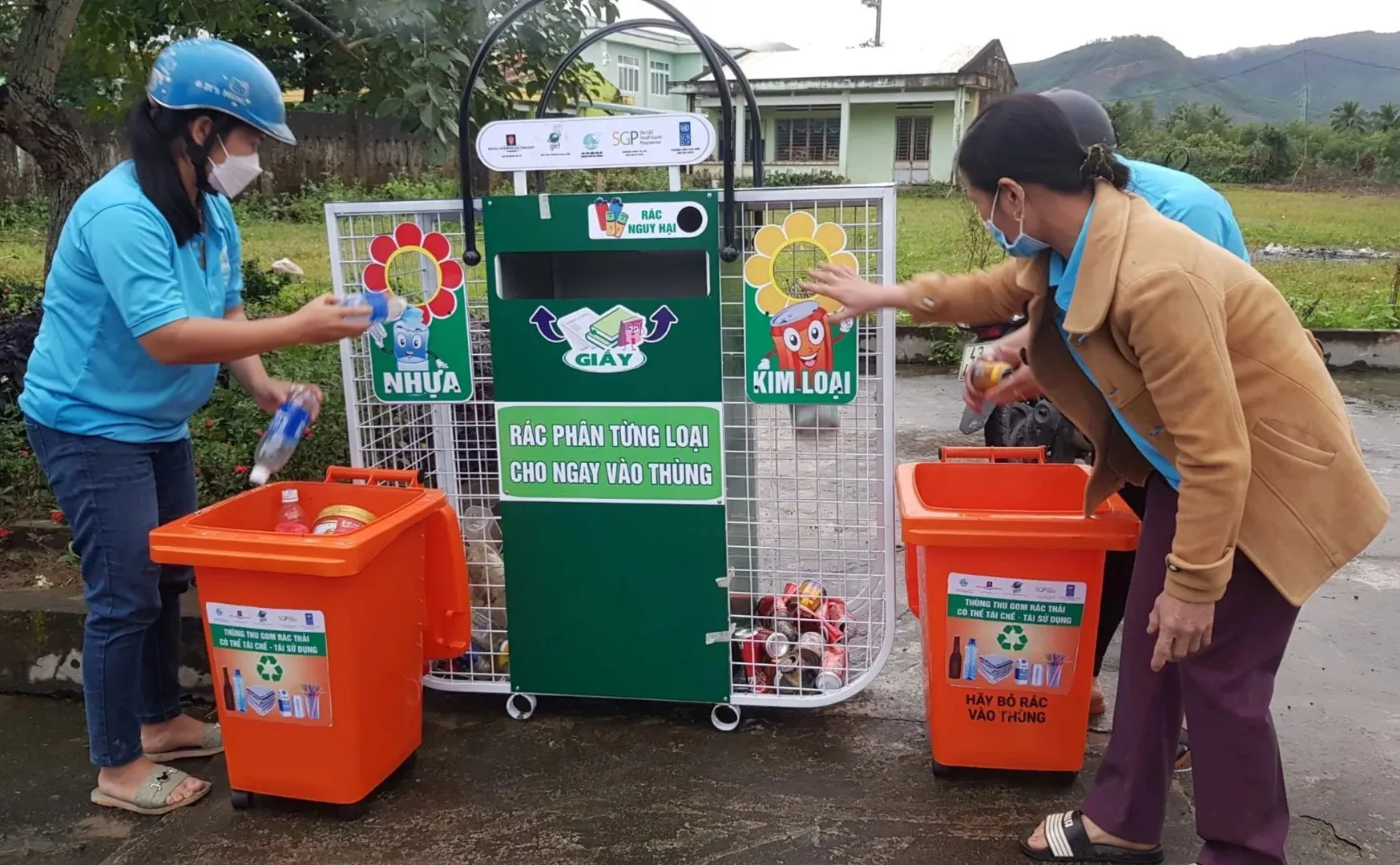
A waste sorting station in Dong Anh, an outskirt commune of Hanoi. Photo: Hanoimoi
Hanoi’s five-year waste sorting pilot program aims to enhance recycling and extend the lifecycle of reusable materials. However, challenges persist due to insufficient public awareness and participation.
Dang Thi Thu Ha, a URENCO worker, observes that some households struggle with limited space for multiple trash bins, while others sort waste but later mix it due to a lack of corresponding public bins.
“Many pilot sites have only distributed trash bags and awareness signs, with infrastructure lagging behind policy. As a result, waste sorting is often perceived as symbolic rather than impactful,” Ha commented to The Hanoi Times.
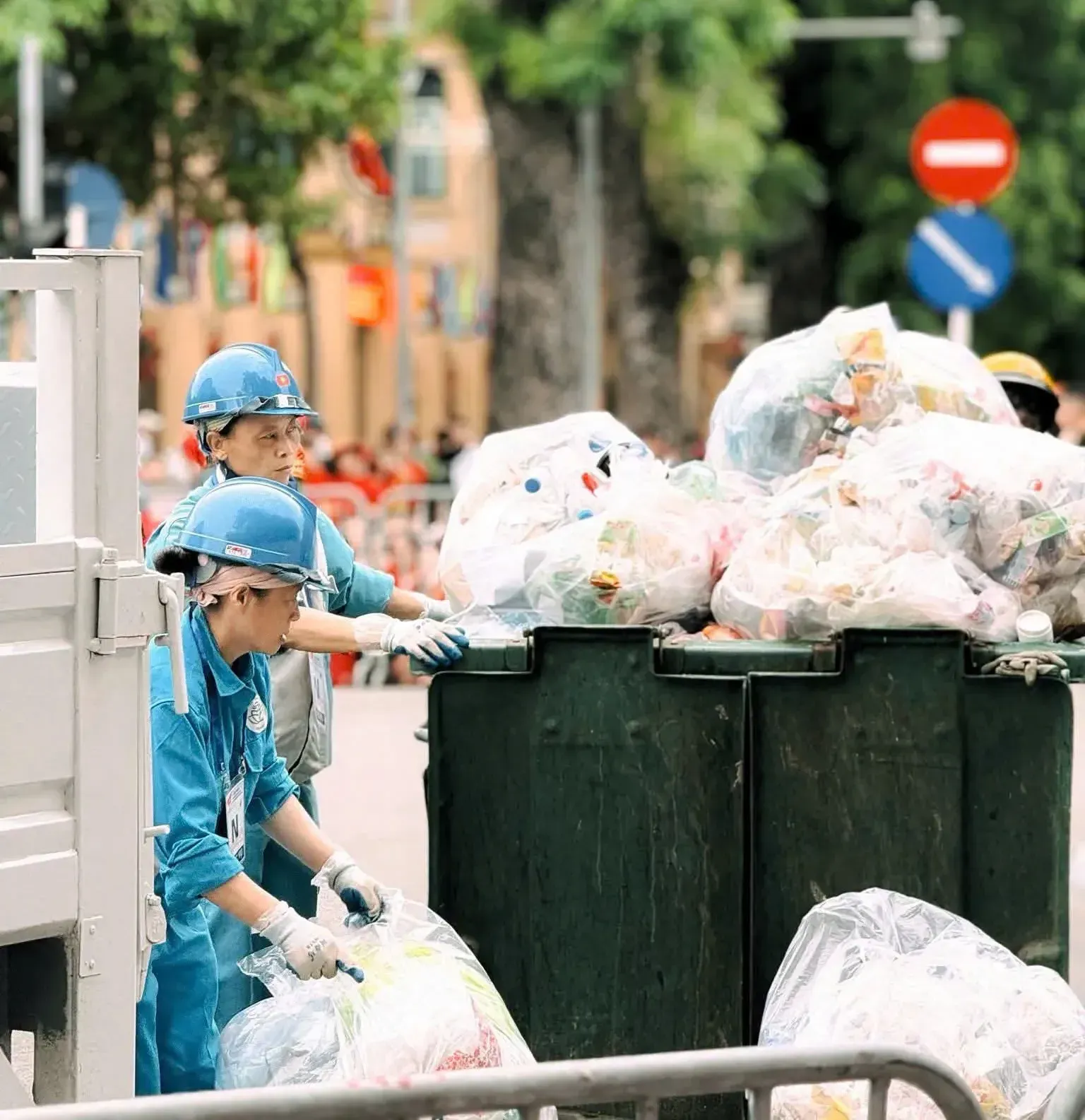
Dang Thi Thu Ha (first left) and a colleague collect waste in Hanoi. Photo: Anh Kiet/The Hanoi Times
“If everyone commits to one simple daily action—disposing of waste in the correct bin—the entire city will transform,” Ha suggested. She recommends regular communication from authorities to raise awareness and encourages schools to educate students on waste sorting, enabling them to apply these practices at home.
|
Benefits of Source-Based Waste Sorting The EU highlights that proper waste separation can reduce CO2 emissions by 200 million tons annually, alongside significant economic benefits. For example, recycling one ton of steel conserves 1.1 tons of iron ore, 625kg of coal, and 53kg of raw limestone. Experts identify plastic as the most promising material for recycling. The World Bank reports that recycling one ton of plastic saves 3.8 barrels of oil. Globally, $80-$120 billion is lost annually due to unrecycled plastic packaging. Hanoi currently generates nearly 1.5 million tons of waste daily, with plastic bags and single-use items comprising 60%. If fully recycled, this waste could yield $1.6 billion annually. However, only 33% is recycled, resulting in a $1.1 billion loss. |