THE HANOI TIMES — For countless families in Hanoi, the potential absence of the Tao Quan television show signifies more than the loss of a beloved comedy. It marks the disappearance of a cherished tradition—a quiet, reflective pause that has long defined the final night of the Lunar New Year.
Rooted in Vietnamese and broader East Asian folklore, the Tao Quan (Kitchen Gods) are believed to oversee household affairs, recording each family’s deeds to present to heaven on the 23rd day of the 12th lunar month. This ancient belief inspired the creation of the Tao Quan television show, blending cultural heritage with contemporary storytelling.

An AI-generated image captures the essence of artists performing in a Tao Quan show.
Tao Quan masterfully combines political satire with comedy, bringing the nation’s most pressing issues to the forefront. Performers transform current affairs into humor, offering not just laughter but also profound reflection on social, economic, cultural, and educational shifts over the past year.
From 2003 to 2025, Tao Quan became a cornerstone of Lunar New Year’s Eve for Vietnamese families. Broadcast as the old year gave way to the new, it united households in shared laughter and contemplation, creating an annual ritual that transcended generations.
The show seamlessly integrates into the evening’s rhythm, accompanying conversations, laughter, and even moments of disagreement. At times, it commands attention; at others, it fades into the background as families prepare for the year ahead. This ebb and flow feels intentional, offering a brief respite before the rush of midnight.
This pause, though fleeting, has always felt purposeful. It’s a collective exhale, a moment when time seems to stand still before the new year begins. Without it, the night loses a vital beat.
Every culture has its seasonal traditions—Christmas has *Home Alone*, Halloween its horror classics. In Vietnam, Tao Quan serves a similar purpose, anchoring memories to a specific moment each year. It’s more than entertainment; it’s a shared experience that fosters connection and reflection, even amid differing opinions.
The humor in Tao Quan seeks recognition over surprise—a nod, a pause, a shared understanding. For many, this moment of connection outweighs the punchline itself. This sentiment deepened during the years I spent Tet away from home. Despite poor streams and inconvenient timing, missing Tao Quan felt like losing a piece of the holiday.
Watching from afar wasn’t about the jokes; it was about timing. Knowing my family in Hanoi was watching at the same moment created an invisible thread, fragile yet strong enough to make Tet feel immediate, not distant. For many, Tao Quan is cultural knowledge, but for others, it’s a lived ritual.
Tao Quan resonates most strongly in Hanoi and the North, where its humor—rooted in dialogue, satire, and socio-political references—finds its ideal audience. It demands close listening, reflection, and a willingness to read between the lines.
While many in the South recognize Tao Quan, few watch it in its entirety. For them, it’s more awareness than experience—a natural difference shaped by regional humor, Tet traditions, and evening routines. In the South, New Year’s Eve often unfolds outdoors, through visits and movement, rather than gathered around a television.
This context explains why the news of Tao Quan’s absence this year sparked quiet regret. It wasn’t about losing a show but a familiar marker of time—a touchstone that helped people understand where and when they were.
Industry insiders attribute the decision to logistical challenges, not declining interest. The show’s demanding rehearsal process and performers’ complex schedules made production increasingly difficult. For a show so intertwined with memory, a half-hearted version would diminish its significance.
I don’t view Tao Quan as outdated. Having watched it since childhood, I’ve seen its meaning evolve with each stage of life. As a child, I laughed because adults did; later, I grasped the jokes’ deeper meanings. As an adult, I find recognition, sometimes mixed with discomfort or self-reflection. This layered experience has kept Tao Quan relevant across generations.
If Tao Quan doesn’t return, people will adapt. New habits will form, and life will go on. Yet its absence this year reveals something profound. For many, especially in Hanoi and the North, Tao Quan is more than a show—it’s a full stop before transition, a moment to reflect, and a quiet signal that Tet has truly begun.
Vietnamese Tet 2026: A Street Festival Celebrating Hanoi’s Timeless Spring Traditions
THE HANOI TIMES — As the Lunar New Year approaches, Hanoi’s Old Quarter transforms into a vibrant tapestry of spring colors and age-old traditions, setting the stage for Vietnamese Tet – Street Tet 2026. This immersive celebration invites locals and visitors alike to experience the living heritage of Vietnam’s capital through its narrow, historic streets. […]
Hanoi’s Lunar New Year Celebration Showcases Vibrant Northern Ethnic Heritage
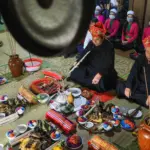
THE HANOI TIMES — As gongs resonate through the wooden stilt houses and the winter air fills with the scent of incense, women adorned in handwoven brocade and village elders meticulously prepare age-old rituals. These scenes evoke the spirit of Tet, Vietnam’s Lunar New Year, weeks before the holiday officially begins. The Thay Mo, a […]
Strolling Through Time: Hanoi’s Living Legacy
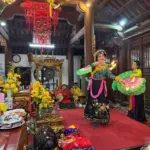
THE HANOI TIMES — Hanoi is transforming memories into motion with a groundbreaking experiential walking tour around Truc Bach Lake. This immersive journey invites visitors to delve into the heart of the capital’s traditions, cuisine, crafts, and daily life, turning heritage from a static display into a vibrant, sensory adventure. Launched on December 27 by […]
Celebrating Vietnam’s Educational Heritage: An Art Exhibition at the Temple of Literature
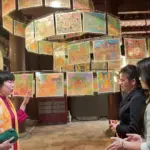
THE HANOI TIMES — The art exhibition, “A Thousand Years of Learning,” opened on December 30 at the Van Mieu – Quoc Tu Giam (Temple of Literature), honoring Vietnam’s enduring legacy of scholarship, respect for educators, and the timeless educational values that have shaped the nation’s cultural identity. Curated by the “Ancient Traces of Culture” […]
Tet’s Radiant Reds Transform Hanoi’s Hang Ma Street
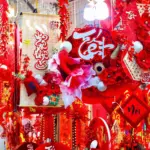
THE HANOI TIMES — Hang Ma Street is already aglow with the vibrant reds of Tet, as vendors showcase 2026 Lunar New Year decorations nearly two months in advance. The street, bathed in a sea of crimson and gold, exudes a festive spirit, transforming this central Hanoi thoroughfare into a seasonal spectacle. Nestled in Hoan […]