THE HANOI TIMES — In a bold move to foster gender equality and ensure sustainable development, Hanoi is intensifying its efforts to combat sex selection. The city’s initiatives aim to stabilize population dynamics and secure a balanced future workforce.
Local authorities are ramping up legal education and awareness campaigns targeting individuals of reproductive age, particularly young couples planning to marry. These programs emphasize the invaluable contributions of women and girls to societal progress.
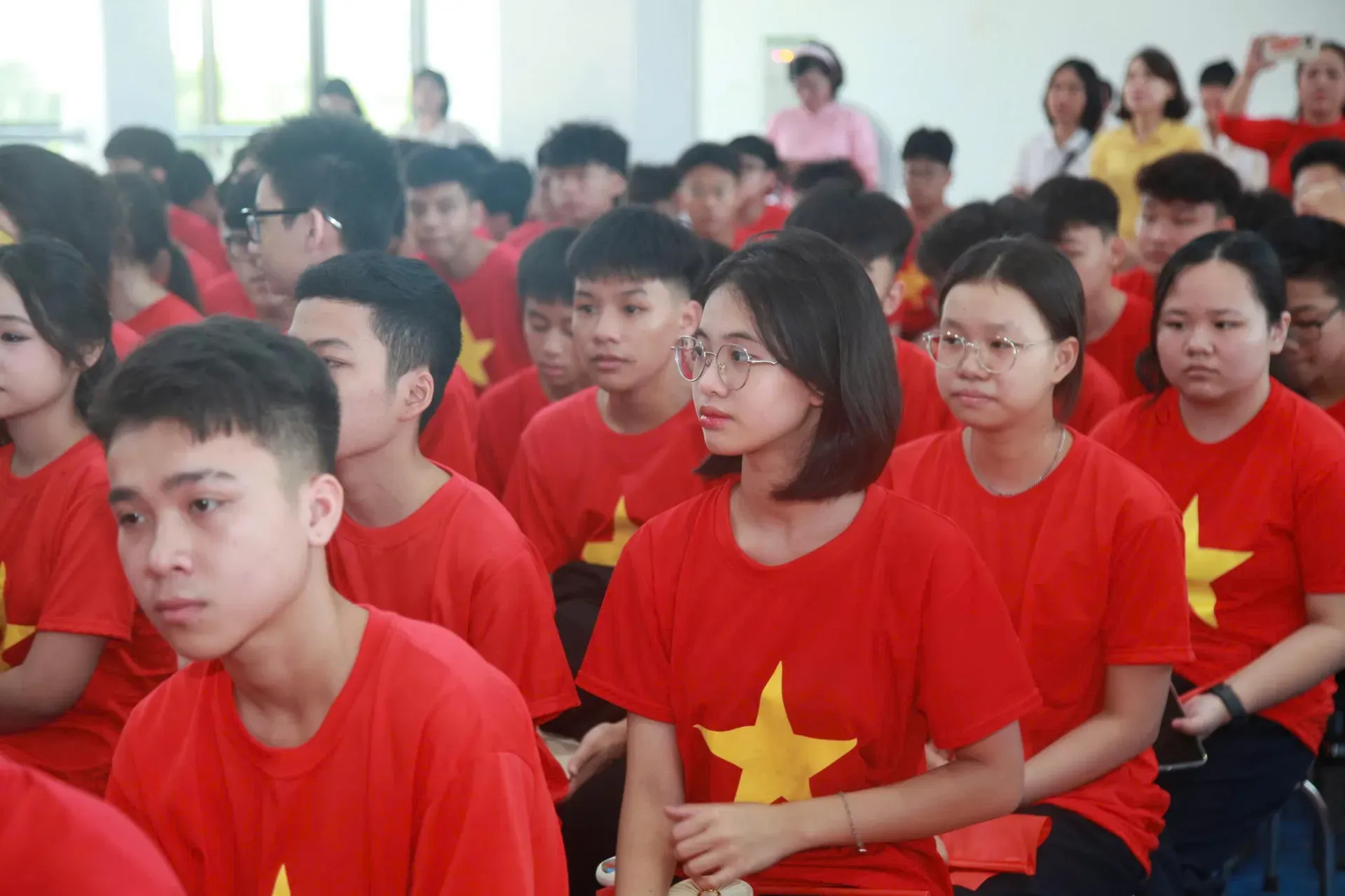
Male and female students at the opening ceremony. Photo: Kinh te & Do thi Newspaper
Communities, including villages, hamlets, and neighborhoods, are encouraged to integrate gender balance principles into their local conventions, fostering a culture of equality at the grassroots level.
Educational institutions are urged to embed gender balance lessons into their curricula, nurturing equitable perspectives among students from an early age. This foundational approach is pivotal for driving long-term societal transformation.
The municipal government is tightening inspections and oversight of medical and service facilities, partnering with healthcare and cultural providers to eradicate prenatal sex selection practices.
These measures are part of Hanoi’s newly launched strategy to address gender imbalance at birth, spanning from 2026 to 2030.
By 2030, Hanoi aims to reduce the annual growth rate of the sex ratio at birth by 0.2 percentage points, capping the ratio at 109 boys per 100 girls.
Hoang Thi Thom, Deputy Director-General of the Ministry of Health’s Population Department, warns that without intervention, Vietnam could face a surplus of 1.5 million males by 2034, escalating to 2.5 million by 2059.
Vietnam first encountered gender imbalance at birth in 2006, with a ratio of 109.8 boys per 100 girls. Despite a slowed growth rate, the ratio has remained at 112 boys per 100 girls since 2013.
Experts caution that persistent imbalance could exacerbate social and economic challenges, including skewed marriage dynamics, human trafficking, and prostitution, further marginalizing women’s societal standing.
Ha Thi Quynh Anh, Senior Gender and Human Rights Advisor at UNFPA, identifies gender bias and son preference as the root causes of this issue.
Historically, families sought to have multiple children to secure a son. With advancements in medical technology, many now opt for prenatal sex selection to guarantee at least one male child.
To address this, Vietnam is championing gender equality, elevating the status of women and girls, and prohibiting all forms of prenatal sex selection. The nation strives to cultivate a just, progressive, and sustainable society.
Hanoi’s initiative will be funded through the state budget, approved programs, and contributions from organizations, businesses, and individuals, in compliance with legal frameworks.
Vietnam Champions Multilateral Collaboration for Water Security

THE HANOI TIMES — Vietnam consistently prioritizes multilateral collaboration for water security to mitigate the impacts of climate change, stated Le Cong Thanh, Deputy Minister of Agriculture and Environment. Addressing the 32nd Regional Steering Committee (RSC) Conference of the International Hydrological Program (IHP) for Asia and the Pacific in Hanoi on October 22, Thanh emphasized […]
First Cultures of World Festival Draws Participation from 48 Embassies and International Organizations
Experience the world in the heart of Hanoi at the inaugural Cultures of the World Festival. From October 3-5, the Thang Long Imperial Citadel will transform into a vibrant tapestry of global traditions, featuring 48 embassies, international organizations, and foreign cultural centers. Immerse yourself in a unique celebration of diversity, where every corner tells a story of heritage and connection.
Vietnam Honored as Guest of Honor at the 102nd Wallonia Festival

Vietnam is honored to be the guest of honor at the 102nd Wallonia Festival, taking place in Namur from September 12–22.
Unleashing India’s GatiShakti: A Revolutionary Blueprint for the Third World’s Infrastructure Renaissance

On the 12th of October, 2024, India’s PM GatiShakti National Master Plan celebrated its third year since its inception in 2021. To mark this occasion, the Indian government revealed significant progress and advancements in the plan’s execution.