
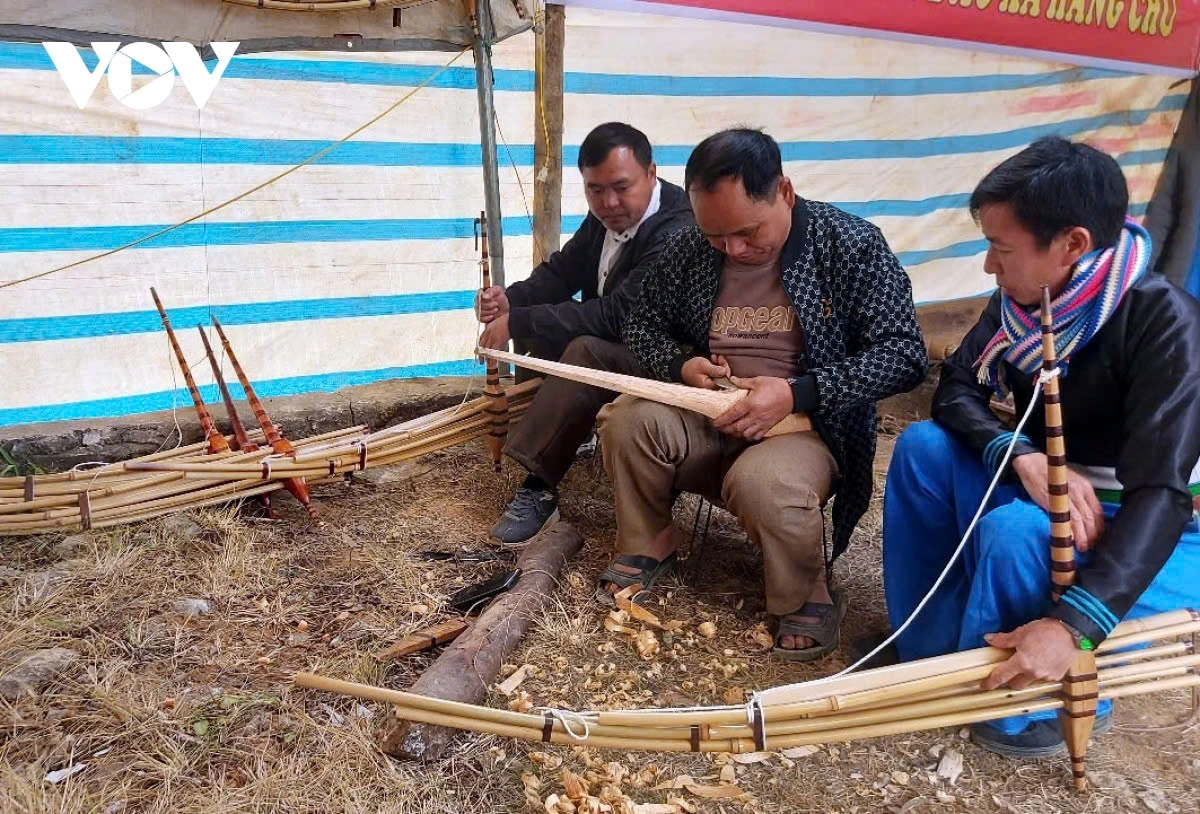
Crafting a premium khèn demands exceptional artistry, from the careful selection of materials to the skilled hands of master craftsmen. The instrument’s body is traditionally carved from pinewood or pơ mu (a type of cypress), prized for its natural flexibility. The wood is meticulously split into planks, dried, and chosen based on precise dimensions: a minimum length of 80 cm and a thickness of approximately 30 cm. The body is then expertly carved, split in half, and hollowed out before being reassembled and bound with rattan to ensure a seamless fit.
Historically, artisans relied on hand tools to shape and hollow the wood, but modern machinery has streamlined this process, enhancing both speed and precision.
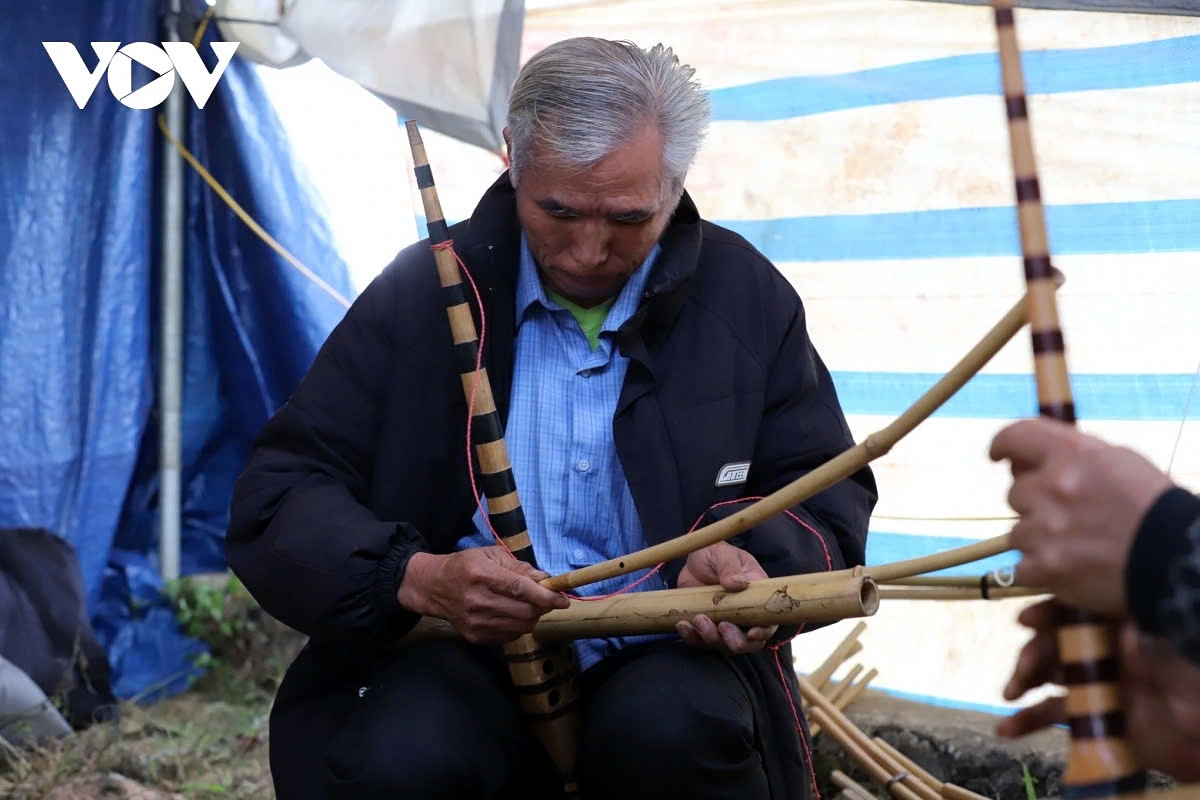
The khèn features six bamboo pipes crafted from măng dê bamboo. To prevent cracking, these pipes are boiled and then sun-dried or cured near a kitchen fire, ensuring durability and longevity.
Mua A Senh, a celebrated khèn maker from Hang Chu village in Bac Yen district, Son La province, reveals that the most challenging aspect of khèn crafting lies in forging the copper reeds.
“The intricate process of casting copper for the reeds demands an exacting material ratio. It takes a full day to forge just two copper pieces, each measuring about 70 cm in length. When crafting both the reeds and the khèn simultaneously, the entire process spans approximately three days to complete a single instrument,” Senh explains.
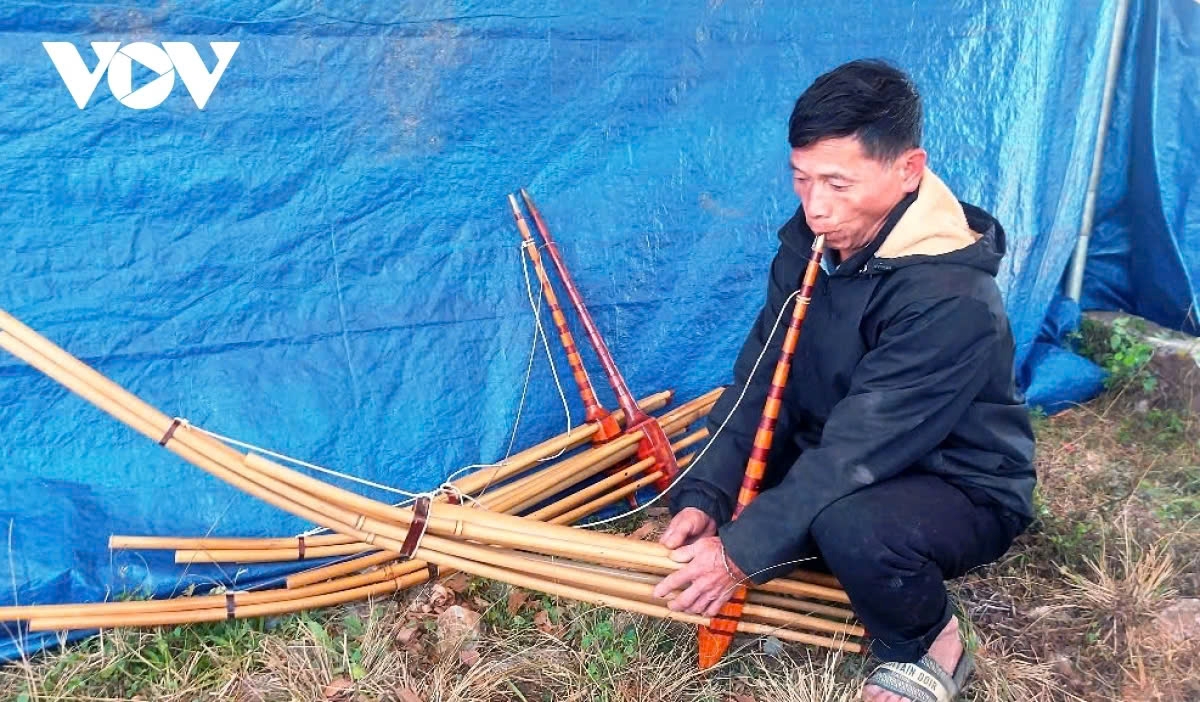
There are two primary types of khèn: the short khèn, known for its rich, resonant tones, and the long khèn, which produces higher-pitched sounds. The short khèn is favored by the Hoa Mong and Leng Mong subgroups, as its timbre aligns with their musical traditions, while the long khèn is preferred by the White Mong. Despite these variations, both types are played using similar techniques, with pitch differences reflecting the distinct dialects of different Mong subgroups.
In Mong funerals, the khèn holds a sacred role, guiding the departed soul back to their ancestors and conveying the prayers and emotions of the living to the deceased. Beyond its spiritual significance, the khèn is also a symbol of joy, much like other Mong instruments such as the flute, two-string fiddle, mouth harp, and leaf khèn. Its melodies express love, connection, and emotion, often serving as a musical language between young men and women.
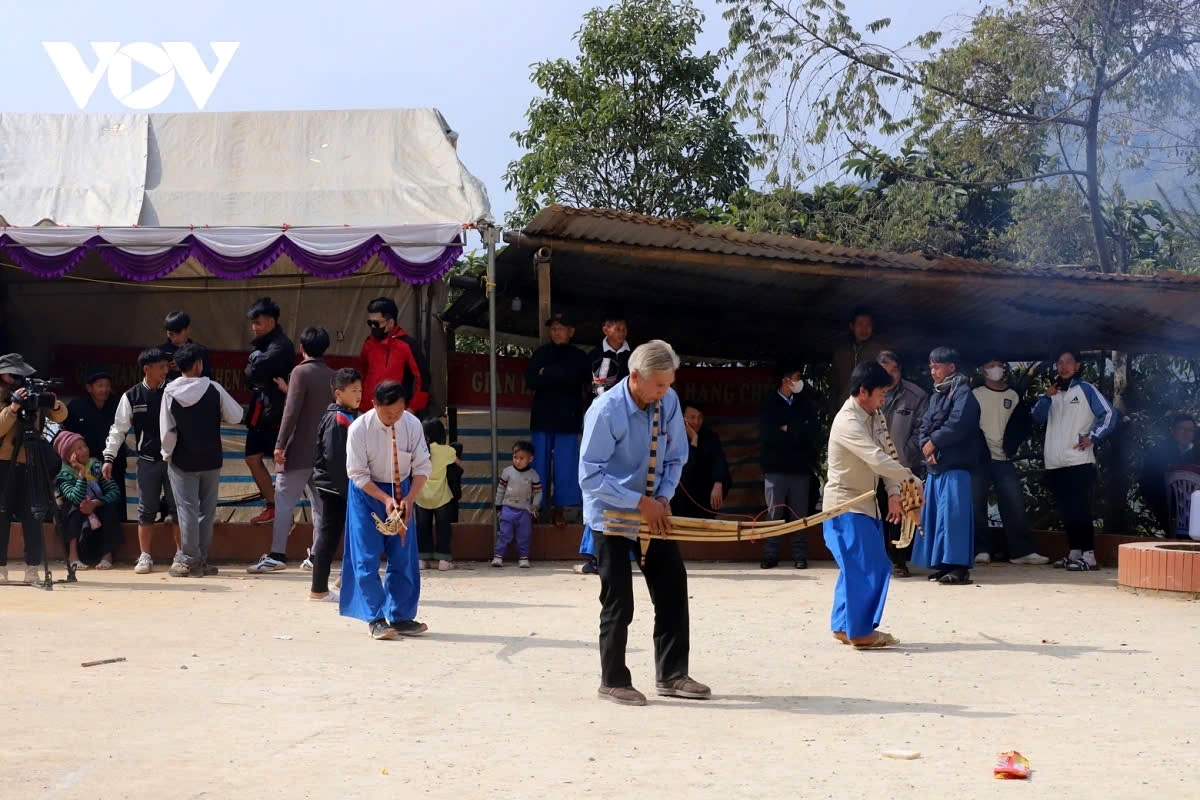
The khèn is a centerpiece in weddings and festive celebrations, including traditional Mong dances like the khèn dance, performed solo, in pairs, or in groups.
“A khèn performance can range from a solo dance to a group ensemble. The movements can be as graceful as a Mong girl weaving fabric or as dynamic as Mong warriors brandishing spears against invaders. This captivating expression enchants audiences and enriches the vibrant atmosphere of Mong festivals,” shares Mua Va Chong, a resident of Phinh Ho village in Hang Chu commune.
In many Mong villages, the number of artisans skilled in crafting the khèn is dwindling. To preserve this cherished tradition, Hang Chu commune recently hosted the 2025 Ancient Stone Festival, featuring khèn-making workshops. These workshops not only showcased the artisans’ skills but also provided younger generations with the opportunity to learn and continue this ancient craft.
Ho A Dua, head of the Hang Chu commune administration, states, “In line with a local Party resolution on preserving and promoting cultural values, we are identifying artisans skilled in making and playing the khèn. We actively encourage them to pass down their expertise to future generations.”
Visiting Mong villages during the spring festival, one is enveloped by the soulful melodies of the khèn, harmonizing beautifully with the vibrant colors of traditional Mong attire. Together, they create a mesmerizing tableau of highland springtime, brimming with joy and cultural pride.
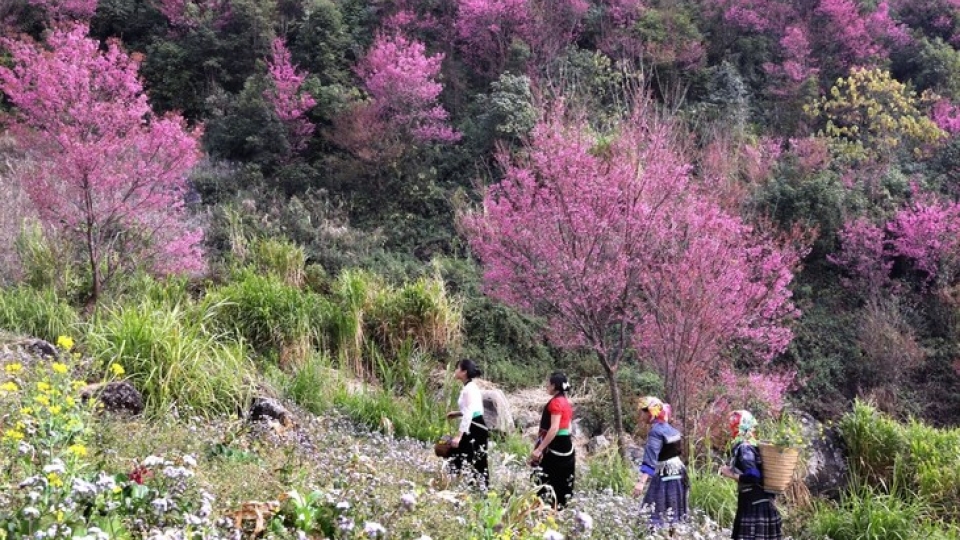
Mu Cang Chai Welcomes 2025 with Mong Panpipe and To Day Flower Festivals
VOV.VN – The Mong Panpipe Festival and the To Day Flower Festival commenced in Mu Cang Chai district, Yen Bai province, on December 27, ushering in the New Year 2025.
Celebrating the New Year Early: A Glimpse into the Traditions of the Ha Nhi Ethnic Community in Northern Vietnam
Nestled in the rugged beauty of Vietnam’s northern mountains, the Ha Nhi people joyfully usher in their New Year festivities a full two months before the Kinh majority, creating a vibrant tapestry of cultural diversity within the nation’s lunar calendar.
Dong Anh District to Prioritize Tourism Development
Dong Anh District is a treasure trove of cultural heritage and tourist attractions that beckon to be discovered.
Vietnam’s Flourishing Festival Tourism Industry

Vietnam’s rich traditions and emerging brand festivals are not only captivating tourists but also driving the country to collaborate with other ASEAN member states in promoting sustainable festival tourism.
Hue’s Cultural Heritage Showcased at Festival
The provincial People’s Committee announced on January 1 that a wide range of exciting events will take place in the central province of Thua Thien – Hue throughout 2024 as part of the Hue Festival 2024.
Guol house, a cultural symbol of the Co Tu ethnic group
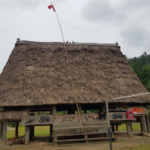
The Guol house showcases the distinctive architecture and rich cultural heritage of the Co Tu ethnic community, primarily residing in the Thua Thien Hue and Quang Nam provinces alongside the magnificent Truong Son mountain range.